
Granite Slab Sizes: Typical Dimensions and Planning
Granite slab sizes decide how many slabs a kitchen needs, where the seams fall and whether a long island can be cut from one piece. Granite Global stocks granite, quartzite, marble, quartz, dolomite and soapstone slabs in Charlotte, and this guide explains the typical dimensions you will see in a slab yard, why sizes vary from slab to slab and how to plan your layout before your fabricator measures.
- 2 cm and 3 cm slabs
- Inventory updated every day
- Walk-ins welcome
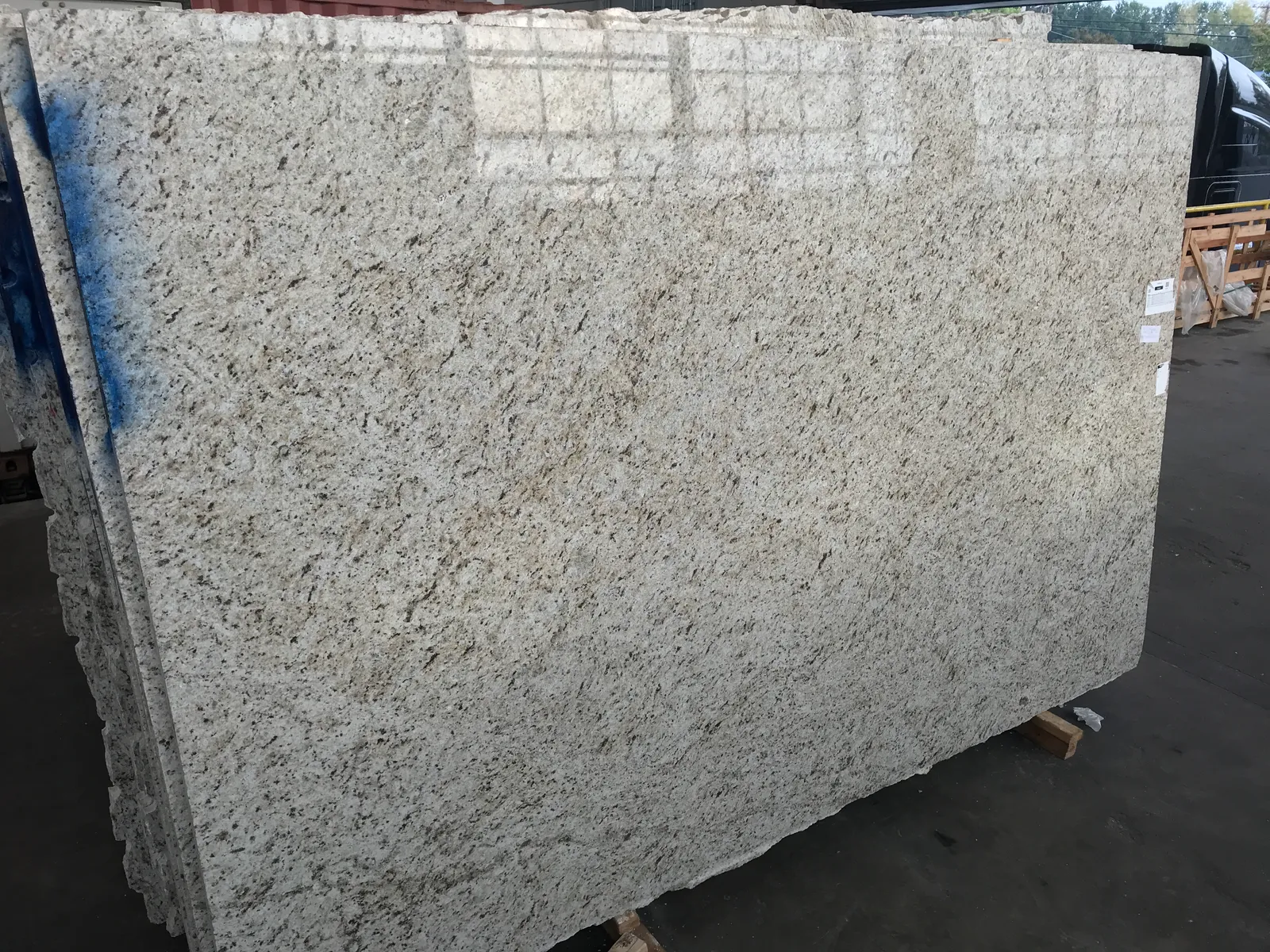
Typical Granite Slab Sizes in a Slab Yard
Granite Global sees most granite slabs fall roughly between 105 and 120 inches long and 60 and 75 inches wide, with jumbo slabs reaching around 130 by 80 inches. These are typical ranges, not fixed sizes: every natural slab is cut from a quarry block, so dimensions change by material, quarry and lot.
| Slab type | Typical length | Typical width | Notes |
|---|---|---|---|
| Standard granite | About 105 to 120 in | About 60 to 75 in | Varies by quarry and block |
| Jumbo granite | About 120 to 130 in or more | About 70 to 80 in | Useful for long islands |
| Quartzite and marble | About 100 to 125 in | About 60 to 78 in | Often less regular in shape |
| Standard quartz | About 120 in | About 55 in | Factory-made, more consistent |
| Jumbo quartz | About 126 to 130 in | About 63 to 65 in | Size depends on the maker |
Always treat these numbers as a starting point. The real dimensions of each slab are measured in the warehouse, and that measurement is what your fabricator uses. You can compare colors first among the granite slabs in stock.
Why Natural Stone Slab Sizes Vary So Much
Granite Global explains that natural stone slabs vary because each one is sawn from a quarry block whose size and soundness differ. Quarries cut blocks as large as the rock allows, and fissures or color changes can force smaller blocks. Engineered quartz, by contrast, is pressed in a mold, so its sizes are far more regular.
- Block size: the quarry face and natural fractures limit how big a block can be
- Material: some stones are typically quarried in larger blocks than others
- Trimming: rough slab edges are often uneven and are not fully usable
- Defects: natural fissures or inclusions near an edge reduce the usable area
- Lot: two lots of the same granite name can arrive in different sizes
That is why two slabs with the same name can give different layouts, and why seeing the actual slab matters more than a size listed for the material in general.
Full Slab Size vs Usable Area for Countertops
Granite Global reminds buyers that the full size of a slab is not the area your fabricator can use. Edges are often rough or chipped, corners may be irregular, and some veins or fissures need to be avoided. Plan on losing a few inches around the perimeter, more if the slab has natural flaws near its edges.
Usable area is the clean part of a slab that a fabricator can actually cut into countertop pieces after trimming rough edges, avoiding flaws and leaving room for saw cuts.
Cutouts for sinks and cooktops also come out of usable area, and so does matching the pattern across a seam. A slab can be big enough on paper and still not give the pieces you need once the pattern direction is respected. Our guide on how many slabs for a kitchen walks through a simple count.
When you are close to the limit, ask your fabricator to lay the pieces out on photos or measurements of the specific slabs before you reserve them.
Slab Thickness and Weight: 2 cm and 3 cm
Granite Global stocks slabs in 2 cm and 3 cm depending on the material. A 2 cm slab is about 3/4 inch thick and a 3 cm slab about 1 1/4 inch. Thickness does not change the length or width, but it changes weight a lot, which affects handling, delivery and how the countertop is supported on the cabinets.
| Thickness | Approximate weight per square foot | Example: slab of about 55 sq ft |
|---|---|---|
| 2 cm (about 3/4 in) | Roughly 12 to 14 lb | Roughly 650 to 770 lb |
| 3 cm (about 1 1/4 in) | Roughly 18 to 20 lb | Roughly 1,000 to 1,100 lb |
Weights are typical ranges for granite and vary by stone. For the trade-offs between the two, read our guide to 2 cm vs 3 cm slab thickness. Overhead cranes in our warehouse handle full slabs safely during loading.
How Slab Size Affects Islands and Seam Placement
Granite Global sees slab size matter most on kitchen islands. If the island top is longer or deeper than the usable area of one slab, it needs a seam, and many homeowners prefer an island without one. Measuring the island first, then looking for slabs large enough to cover it, avoids surprises later.
Measure the island first
Write down the full island top size, including any seating overhang, before you visit the slab yard.
Look for jumbo slabs
Long or deep islands may need a jumbo slab to stay seamless. Ask which materials come in larger sizes.
Check pattern direction
Strong veining usually runs one way. Rotating a piece to fit can make the pattern look wrong.
Plan perimeter seams
Perimeter runs often seam near corners or sinks. Your fabricator chooses the least visible spots.
Seam placement is a fabrication decision, so share the slab dimensions with your fabricator early and let them confirm what is possible.
How to Plan Your Layout Around Granite Slab Sizes
Granite Global recommends a short planning routine before any slab is reserved: measure the countertops, sketch them with dimensions, compare against typical slab sizes, then measure the real slabs you like. Your fabricator makes the final layout, but arriving with a drawing makes the warehouse visit faster and helps you choose slabs that fit.
Measure every run
Record length and depth of each countertop section, the island and any backsplash or window sill you want in stone.
Sketch the layout
Draw a simple plan with dimensions and mark the sink, cooktop and seating overhang.
Compare with slab sizes
Check which pieces exceed a typical slab and note where an island may need a jumbo slab.
Measure the real slabs
At the warehouse, record the length and width of the slabs you like and photograph them for your fabricator.
Many fabricators prefer to see the slabs themselves before cutting. When your layout is ready, visit our Charlotte slab warehouse with the drawing and the material names you are considering.
Common Slab Size Mistakes When Planning a Kitchen
Granite Global often sees projects slowed down by the same slab size mistakes: assuming every slab is the same size, counting full size instead of usable area, forgetting the island overhang and reserving too few slabs from the same lot. Most of these are avoided by measuring first and checking the actual slabs.
- Using a size listed online for the material instead of measuring the real slab
- Forgetting that rough edges and flaws reduce usable area
- Leaving out the island overhang, backsplash or window sill from the count
- Choosing one slab now and hoping a matching slab will be available later
- Ignoring pattern direction when pieces are rotated to fit
Natural stone changes from lot to lot, so if your project needs more than one slab, try to choose them together while they are in stock.
Slab Size Checklist Before Your Warehouse Visit
Granite Global suggests bringing a few simple items to the warehouse so you can judge whether a slab fits your project on the spot. With a layout, a tape measure and a camera, you can record the real dimensions of each slab you like and share them with your fabricator the same day.
- A sketch of your countertops with every dimension
- The size of the island including any overhang
- A tape measure for the slabs you like
- Your phone to photograph each slab, front and edges
- The thickness you plan to use, 2 cm or 3 cm
- Your fabricator's name and contact details
Before you go, check the live inventory to see which materials are in stock, coming soon or sold out, since availability changes every day.
Questions About Granite Slab Sizes
What is the standard size of a granite slab?
There is no single standard, because natural slabs are cut from quarry blocks of different sizes. Most granite slabs fall roughly between 105 and 120 inches long and 60 and 75 inches wide. Jumbo slabs can reach about 130 by 80 inches. Granite Global measures the real slabs, and your fabricator plans from those numbers.
How big is a jumbo granite slab?
Jumbo slabs are typically around 120 to 130 inches long or more and about 70 to 80 inches wide, though the exact size depends on the material and quarry. They are useful for long islands that would otherwise need a seam. Ask the Granite Global team which materials currently have larger slabs in stock.
Are quartz slabs the same size as granite slabs?
Not exactly. Quartz is made in a factory mold, so sizes are more consistent, often around 120 by 55 inches for standard slabs and larger for jumbo slabs, depending on the maker. Granite and other natural stones vary more from slab to slab, so each one should be measured.
How much does a granite slab weigh?
A 3 cm granite slab typically weighs roughly 18 to 20 pounds per square foot, and a 2 cm slab roughly 12 to 14 pounds per square foot. A full 3 cm slab can easily weigh well over 1,000 pounds, which is why warehouses use cranes and fabricators use special equipment to move them.
Can a kitchen island be made from one slab?
Often yes, if the island top fits inside the usable area of one slab. Large islands may need a jumbo slab to avoid a seam. Measure the island including the overhang, compare it with the real slabs at Granite Global and let your fabricator confirm whether a seamless top is possible.
Why do two slabs of the same granite have different sizes?
Each slab is cut from a quarry block, and blocks differ in size and in where natural fissures fall. Two lots of the same granite can arrive in different dimensions and even slightly different colors. Choosing all the slabs for one project together helps keep size and color consistent.
Who decides the final layout of my countertops?
Your fabricator makes the final layout. They measure the cabinets, choose where seams go, place cutouts and fit the pieces on the slabs you selected. Granite Global is a distributor that supplies the slabs, so bring your fabricator into the decision early and share the slab measurements.
Measure the Real Slabs Before You Decide
Bring your countertop drawing and a tape measure to our Charlotte warehouse and check the actual slab sizes, no appointment needed.