
Quartzite vs Granite: How to Choose Your Countertop Slab
Choosing between quartzite vs granite comes down to look, hardness and care, not to which stone is better. Granite Global, a family-owned stone distributor in Charlotte, NC, stocks both side by side, so this guide explains what each stone is, how they behave in a real kitchen and how to tell them apart when you see the slabs in person.
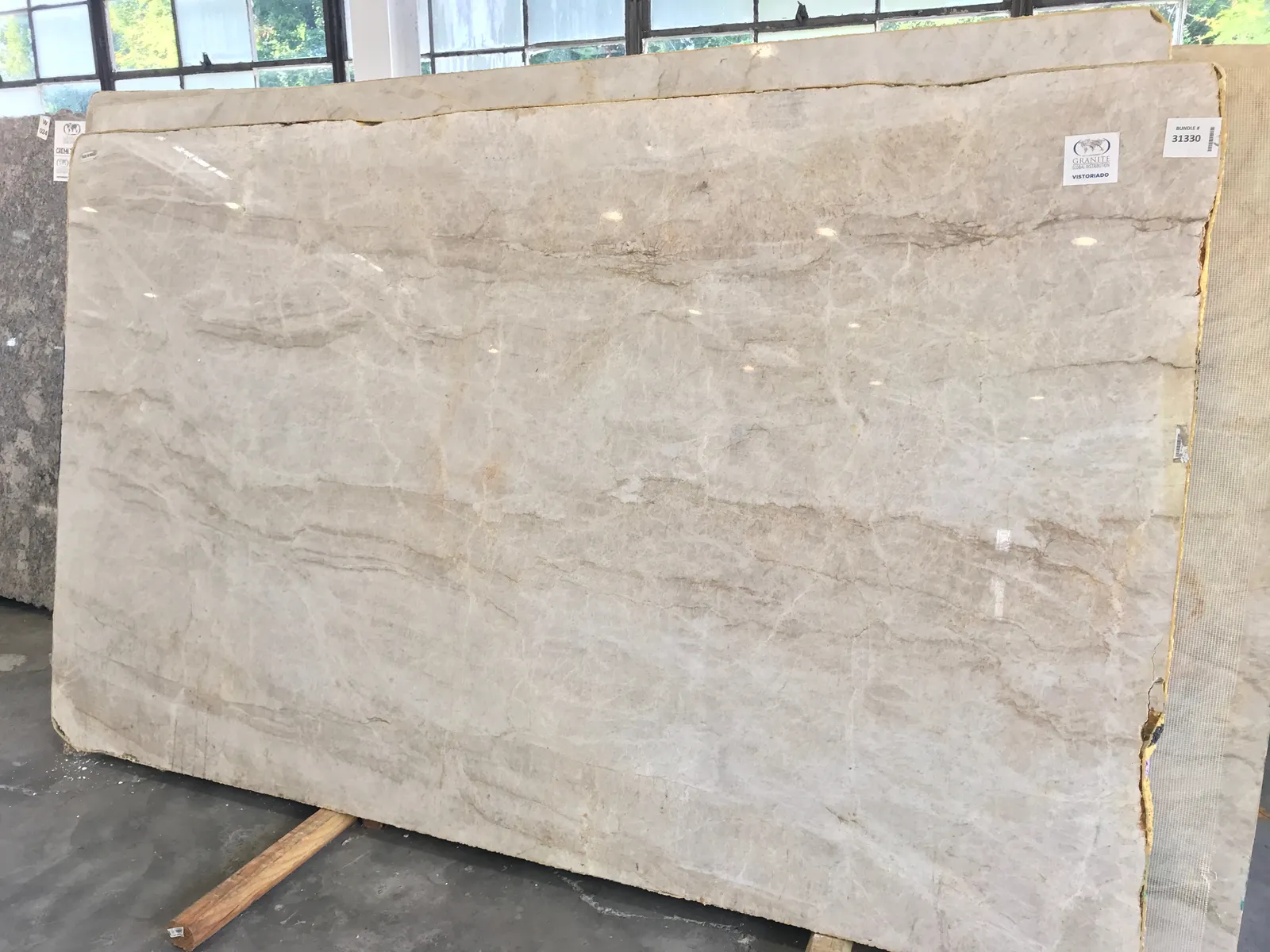
Quartzite vs Granite: The Short Answer
Quartzite and granite are both natural stones that work very well as kitchen countertops. Granite Global tells customers the real difference is the look: quartzite usually has long veins and a marble-like softness, while granite shows a granular, speckled or swirling pattern. Quartzite is usually a little harder; granite offers more colors.
| Factor | Quartzite | Granite |
|---|---|---|
| How it formed | Sandstone changed by heat and pressure (metamorphic) | Magma that cooled slowly underground (igneous) |
| Main minerals | Mostly quartz | Mostly feldspar and quartz, often with mica |
| Typical hardness (Mohs) | Around 7 | Around 6 to 6.5 |
| Typical look | Veins and soft movement, often white, gray or taupe | Grains, flecks and swirls in a very wide color range |
| Heat | Handles warm cookware well | Handles warm cookware well |
| Acid (lemon, vinegar) | True quartzite does not etch | Does not etch in normal kitchen use |
| Sealing | Needed from time to time; porosity varies | Needed from time to time; lighter colors more often |
| Watch out for | Stones sold as quartzite that are really dolomite or marble | Very porous light granites that stain if left unsealed |
If you are also weighing an engineered option, our guide to quartz vs quartzite explains why quartz and quartzite are completely different products despite the similar names.
What Quartzite and Granite Are Made Of
Granite Global explains the difference with geology: quartzite started as sandstone and was transformed by heat and pressure until its quartz grains fused together, while granite crystallized from magma deep underground. That origin explains almost everything else, from quartzite's glassy hardness to granite's speckled, crystal-rich pattern and wide color range.
- Quartzite
- A metamorphic rock formed when quartz-rich sandstone is recrystallized under heat and pressure. The grains fuse so tightly that the stone often looks slightly glassy and breaks through the grains rather than around them.
- Granite
- An igneous rock formed when magma cooled slowly underground, letting visible crystals of feldspar, quartz and mica grow. In the stone trade, the name granite also covers related igneous stones with similar performance.
- Soft quartzite
- A trade label for stones sold as quartzite that contain carbonate minerals. Some of them are really dolomite or marble, so they can etch with acid and scratch more easily than true quartzite.
Because the trade name on a slab is not a lab report, the safest approach is to judge the actual stone. Our guide to real vs fake quartzite walks through the tests in detail, and a short version appears in the checklist below.
Hardness, Heat and Stains in Daily Kitchen Use
In a busy kitchen, both stones perform very well, and Granite Global sees homeowners happy with either one for decades. Quartzite usually resists scratching a bit better because it is mostly quartz. Granite is the more forgiving choice for staining in darker colors. Neither stone likes very hot pans placed straight from the oven.
| Situation | Quartzite | Granite | Good habit |
|---|---|---|---|
| Knives and pots | Very scratch resistant | Very scratch resistant | Cut on a board to protect your knives |
| Hot pans | Tolerates heat well | Tolerates heat well | Use trivets to avoid thermal shock near seams and edges |
| Red wine and oil | Can absorb if unsealed | Can absorb if unsealed, mostly light colors | Wipe spills quickly and keep the sealer fresh |
| Lemon juice and vinegar | No etching on true quartzite | No etching in normal use | Check soft quartzites with the vinegar test |
| Cleaning | Mild soap and water | Mild soap and water | Skip bleach, vinegar and abrasive powders |
Porosity varies more from slab to slab than from stone type to stone type. A dense dark granite may rarely need sealing, while a light, open-grained granite or a lightly veined quartzite may need it once or twice a year. The water drop test tells you where your stone stands.
Finish matters too: a leathered or honed surface hides fingerprints and small marks differently from a polished one, so ask which finishes each slab comes in before you decide.
Look and Style: Veins or Grains
Most people decide between quartzite and granite by eye, and Granite Global encourages that. Quartzite is the natural answer for a bright, marble-like kitchen with long, soft veins. Granite gives you the widest palette, from quiet whites and creams to deep blues, greens and blacks, plus bold exotic patterns for statement islands.
Choose quartzite for movement
Long veins, soft gray and taupe tones and a calm, marble-like look, with more hardness than marble. Popular examples include Taj Mahal and White Macaubas.
Choose granite for color range
Speckled, flowing or dramatic patterns in almost any color, from Santa Cecilia's warm golds to Blue Pearl's shimmering blue and Absolute Black.
Many of the quartzites and granites we stock come from Brazil, where both stones are quarried in remarkable variety. Every slab is unique, so photos only get you to a shortlist; the final choice should happen in front of the real stone, ideally in daylight.
Browse our quartzite slabs in Charlotte for veined, light-toned options, or compare the granite slabs in stock when you want color and pattern.
How to Choose Between Quartzite and Granite
Granite Global suggests four questions to settle the choice: which look you love in person, how hard the kitchen will be used, how much care you will accept, and which cabinets, floors and backsplash the stone must match. Answer them honestly and the right stone usually becomes obvious before you reach the warehouse.
| If this matters most | Lean toward | Why |
|---|---|---|
| A white, marble-like look without marble's etching | Quartzite | True quartzite pairs long veins with high hardness |
| A specific color such as blue, green, gold or black | Granite | Granite comes in the widest color range |
| Very low upkeep | Dark, dense granite | Usually absorbs very little and hides crumbs and spots |
| A heavy-use family kitchen | Either one | Both resist scratches and heat in daily cooking |
| A dramatic island with a calmer perimeter | Mix them | An exotic slab on the island and a quieter stone on the walls |
Considering marble-look stones beyond quartzite? Our comparison of marble vs dolomite explains how those two behave next to quartzite and granite.
Common Mistakes When Comparing the Two Stones
The mistakes Granite Global sees most often are trusting a trade name without testing the stone, choosing from a small photo, and forgetting about sealing. Each one is easy to avoid with a few minutes in the warehouse, a phone flashlight, a glass tile and a small bottle of water.
- Assuming every slab labeled quartzite is true quartzite. Some soft quartzites are really dolomite or marble and will etch.
- Choosing from a website photo alone. Photos are representative; the actual slab can be warmer, cooler or busier.
- Looking at only the first slab in a bundle. The slabs behind it can show a cleaner or bolder pattern.
- Skipping the water test on light-colored granite and quartzite, then discovering an oil ring a month later.
- Forgetting the seams. A slab with strong veins needs planning so the pattern flows across the joints.
- Ignoring the rest of the room. Hold the slab next to your cabinet door, floor sample and backsplash tile.
Ask our team to show you the slabs behind the first one in a bundle; customers often find their favorite two or three slabs deep.
A Checklist to Tell Quartzite From Granite
Granite Global recommends a simple checklist to confirm what you are buying before a fabricator cuts it. With a sample or an approved test spot, a glass tile shows hardness, a drop of vinegar shows whether the stone etches, and a few drops of water show how quickly it absorbs and needs sealing.
- Ask for the exact material name and the slab or lot number as the warehouse system lists it
- Look at the pattern: long veins suggest quartzite or marble, visible grains and flecks suggest granite
- With permission, press the corner of a glass tile on a sample: true quartzite scratches glass easily
- Place a drop of vinegar on a sample for a few minutes: a dull mark means carbonate minerals
- Do the water drop test: darkening within minutes means the stone needs sealing
- Check the slab in daylight for fissures, pits and resin-filled areas
- Photograph each slab with its label so your fabricator can find it
For the full list of what to bring and ask on the day, use our slab yard visit checklist, then visit our Charlotte slab yard and test the stones yourself.
When Neither Stone Is the Right Fit
Sometimes the honest answer is a third material, and Granite Global stocks those too. Engineered quartz suits people who want zero sealing and a uniform look. Marble and dolomite suit people who love a classic white stone and accept a patina. Soapstone suits farmhouse and vintage kitchens that welcome a darkening, softly worn surface.
Each of these materials changes the care routine. Quartz needs no sealer but dislikes direct high heat. Marble etches with acids. Soapstone scratches easily but those marks can be blended away with mineral oil or light sanding, which is why many cooks love it.
Read our honest look at soapstone countertops pros and cons for real kitchens if a darker, matte stone appeals to you.
Questions About Quartzite vs Granite
Is quartzite more durable than granite?
True quartzite is usually a little harder than granite, at around 7 on the Mohs scale compared with roughly 6 to 6.5 for granite, so it resists scratching slightly better. In daily kitchen use both stones are very durable. Granite Global suggests choosing by look and care routine, then confirming the stone's behavior with a quick glass and vinegar test.
Does quartzite need to be sealed?
Yes, most quartzites benefit from a penetrating sealer, because the stone has small pores that can absorb oil and colored liquids. How often depends on the slab: some dense quartzites rarely absorb water, while lighter, more open ones need resealing once or twice a year. A simple water drop test on your countertop tells you when it is time.
Why do some quartzites etch?
Some stones sold as quartzite contain carbonate minerals such as calcite or dolomite. Those minerals react with acids like lemon juice and vinegar, leaving a dull mark called an etch. True quartzite is mostly quartz and does not etch. Granite Global recommends a vinegar test on a sample before you commit to a white, marble-look quartzite.
Which is easier to maintain, quartzite or granite?
A dark, dense granite is usually the easiest of the two, because it absorbs very little and hides crumbs and water spots. Light granites and quartzites need a bit more attention to sealing. Both clean well with warm water and mild dish soap. Avoid bleach, vinegar and abrasive powders on any natural stone countertop.
Can I put hot pans on quartzite or granite?
Both stones tolerate heat far better than engineered quartz, so a warm pot is not a problem. Still, Granite Global recommends trivets for pans straight from the oven or stove, because sudden, concentrated heat can stress the stone near seams, sink cutouts and edges, and can damage the sealer or resin used in some slabs.
Can I see quartzite and granite slabs in Charlotte?
Yes. Granite Global stocks both in its Charlotte, NC warehouse, and walk-ins are welcome without an appointment during business hours. Check the online inventory first, which updates every day from our warehouse system, then send the material names and the day you plan to visit through the Visit Us page so our team can help you on arrival.
Compare Quartzite and Granite Side by Side
Shortlist a few slabs online, then walk into our Charlotte warehouse and see the real stones next to each other, no appointment needed.