
Bathroom Vanity Countertops: Choosing the Stone
Bathroom vanity countertops face a different kind of wear than kitchen counters: daily water, soap, toothpaste, cosmetics, perfume and hair products, but little heat and few knives. Granite Global stocks granite, quartzite, marble, quartz and dolomite slabs in Charlotte, and this guide compares how each stone handles a bathroom so you can choose a vanity top that looks good and stays easy to clean.
- Marble, dolomite, quartz and more
- Inventory updated every day
- Walk-ins welcome
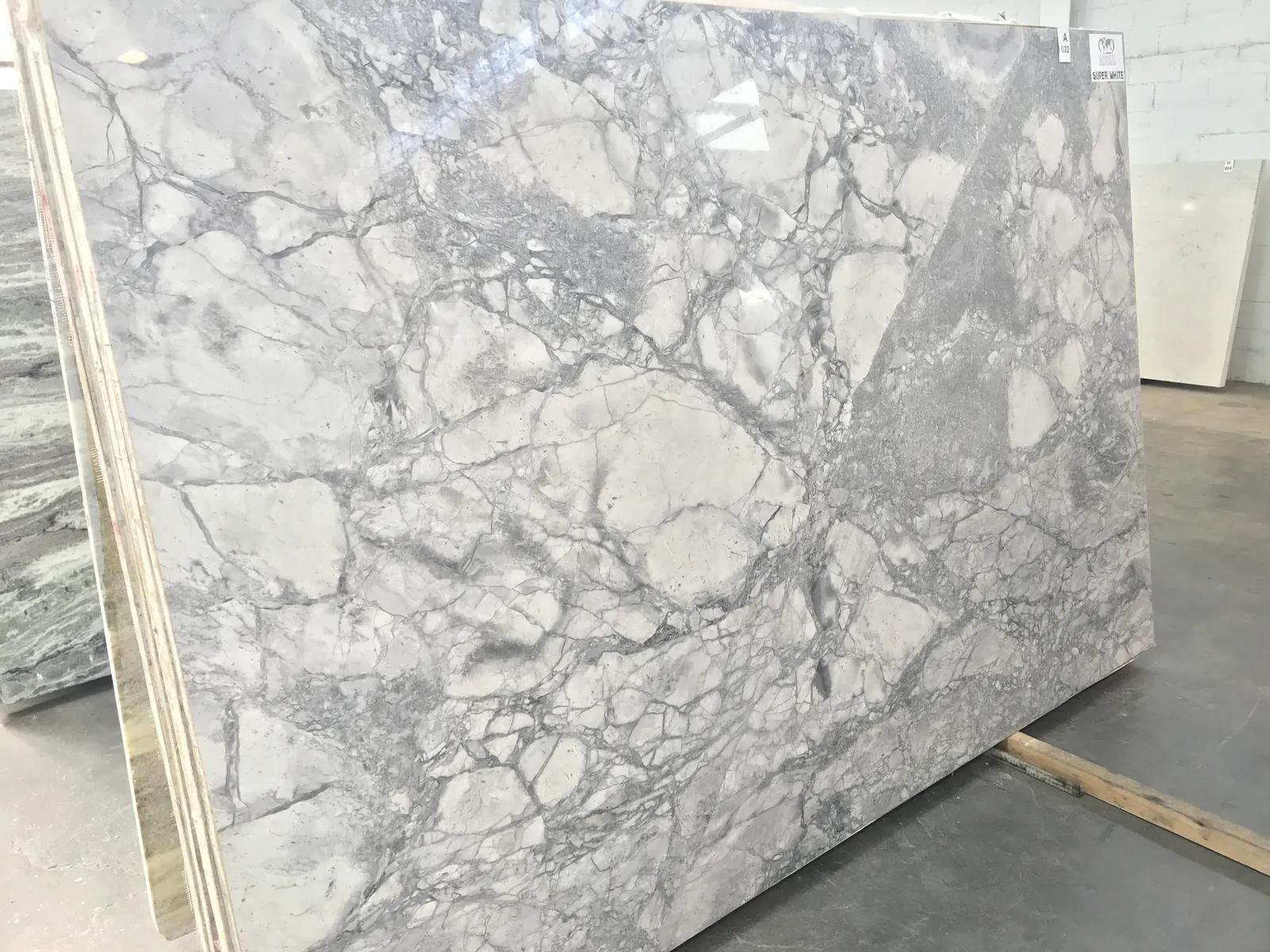
What a Bathroom Vanity Countertop Has to Handle
Granite Global points out that a vanity top rarely sees heat or heavy impact, but it does see constant moisture and many chemical products. Water sits around the faucet, toothpaste and soap dry on the surface, and perfume, hair dye and some skin products can stain or etch sensitive stones. Those are the risks to plan for.
Standing water
Water pools around faucets and sink edges every day. Porous stone that is not sealed can darken or show rings.
Cosmetics and perfume
Alcohol, oils and pigments in beauty products can stain light stones or dull a polish on calcium-based stone.
Soap and toothpaste
Residue builds up quickly. Some toothpastes and cleaners are mildly abrasive or acidic over time.
Cleaning products
Bathroom cleaners often contain acids or bleach that are harsh on natural stone and sealers.
The good news is that vanities do not need the heat or scratch resistance of a busy kitchen, which opens the door to softer stones if you are willing to care for them.
Vanity Countertop Materials Compared Side by Side
Granite Global compares the five materials most often used on vanities by how they handle water, cosmetics and cleaning. Granite, quartzite and quartz are the most forgiving. Dolomite sits in the middle. Marble is the most delicate but also the most classic, and many homeowners accept its patina in a bathroom.
| Material | Water and moisture | Cosmetics and acids | Care level | Look |
|---|---|---|---|---|
| Granite | Good when sealed | Resists most products | Low | Speckled or moving patterns |
| Quartzite | Good when sealed | Resists most products | Low to medium | Marble-like veining |
| Quartz (engineered) | Not porous | Resists most stains | Low | Consistent, many styles |
| Dolomite | Fair; seal regularly | Less reactive than marble | Medium | Soft white veining |
| Marble | Fair; seal regularly | Etches from acids | Higher | Classic white and grey veining |
These are general behaviors; individual slabs vary in density and absorption, so ask our team or your fabricator about the specific stone you like.
Marble and Dolomite on a Bathroom Vanity
Granite Global often sees marble and dolomite chosen for vanities because bathrooms are where the classic veined look works well with less risk than in a kitchen. Marble etches when acids touch it, while dolomite is usually harder and less reactive. Both need sealing and gentle, pH-neutral cleaners to stay looking their best.
If you love veining, browse the marble slabs in stock and the dolomite slabs in stock side by side. Our comparison of marble vs dolomite explains how to tell them apart and what each needs.
- A honed finish hides small etch marks better than a high polish
- Use trays for perfume, hair products and skin care
- Wipe toothpaste and cosmetics the same day
- Avoid vinegar, lemon and bleach-based cleaners
Many homeowners accept a soft patina on a marble vanity as part of its character; if you would rather not, look at dolomite or quartzite with a similar look.
Granite, Quartzite and Quartz as Low-Care Vanity Tops
Granite Global recommends granite, quartzite or quartz when the vanity is in a busy family or kids' bathroom. All three shrug off most cosmetics and cleaning products. Granite and quartzite are natural stones that need occasional sealing, while quartz is not porous. Quartzite offers a marble-like look with much more resistance to etching.
- Granite
- Durable, widely available in many colors, and easy to maintain with periodic sealing.
- Quartzite
- Hard and resistant to etching, often with veining similar to marble. Read quartzite vs marble to compare the two.
- Quartz
- Engineered from crushed quartz and resin, consistent in color and not porous. It does not need sealing.
In a bathroom, heat is rarely an issue, but hot styling tools set directly on quartz can mark the resin, so a heat-resistant mat is a good habit.
Vanity Countertop Sizes, Thickness and Sink Cutouts
Granite Global notes that vanity tops are usually smaller and lighter than kitchen counters. Many are made from 2 cm slabs, which are lighter and fit standard vanity cabinets well. A typical vanity depth is about 21 to 22 inches, and the fabricator cuts holes for the sink and faucet based on the fixtures you choose.
| Decision | Typical options | Why it matters |
|---|---|---|
| Thickness | 2 cm or 3 cm | 2 cm is lighter; 3 cm gives a heavier edge |
| Sink type | Undermount, vessel or integrated look | Sets the cutout and the edge finish |
| Faucet holes | Single hole, centerset or widespread | Must match the faucet you buy |
| Backsplash | Short splash or full-height stone | Protects the wall from water |
| Edge profile | Eased, beveled, bullnose or mitered | Affects look and comfort |
Choose your sink and faucet before the fabricator templates, because the cutouts are made to the exact fixtures. Our guide to 2 cm vs 3 cm slab thickness explains the thickness trade-offs.
How to Choose a Vanity Stone, Step by Step
Granite Global suggests deciding in four steps: think about who uses the bathroom, pick a material family to match that use, choose the look and finish, then see the real slab. A primary bath used by two adults can handle a more delicate stone than a busy kids' bathroom or a guest bath.
Consider who uses it
Kids, guests or a single careful adult each put different demands on the stone.
Pick the material
Granite, quartzite or quartz for heavy use; marble or dolomite where you accept more care.
Choose color and finish
Match tile, cabinet and fixture finishes. Honed hides etching, polished shows more depth.
See the real slab
Look at the full slab in person and choose the part of the pattern you want on the vanity.
Bring tile samples and a photo of the vanity cabinet when you visit our Charlotte slab warehouse; stone colors shift next to bathroom tile more than people expect.
Common Vanity Countertop Mistakes to Avoid
Granite Global hears about a handful of vanity mistakes over and over: using harsh bathroom cleaners on natural stone, skipping the sealer on marble, buying the faucet after the cutouts are made and choosing a polished marble for a busy kids' bath. All are easy to avoid with a little planning up front.
- Cleaning marble or dolomite with vinegar, bleach or acidic sprays
- Never sealing a porous stone in a wet room
- Ordering cutouts before choosing the sink and faucet
- Letting perfume, hair dye or nail products sit on a light stone
- Choosing a sample instead of seeing which part of the slab becomes the top
Most damage on vanities comes from products and cleaners, not from the stone itself, so a pH-neutral stone cleaner is one of the best small investments you can make.
Bathroom Vanity Stone Checklist
Granite Global recommends a short checklist so the vanity decision goes smoothly from slab yard to installation. Having the vanity size, fixtures and finishes settled before your visit lets you judge the slab properly and gives your fabricator everything needed to template and cut the top correctly.
- Vanity cabinet width and depth
- Sink model and faucet type chosen
- Tile and cabinet samples or photos
- Preferred thickness, 2 cm or 3 cm
- Preferred finish: polished, honed or leathered
- Your fabricator's name and contact details
Check the live inventory before you go, since materials can sell out or arrive any day, and ask our team which slabs suit a vanity-sized project.
Questions About Bathroom Vanity Countertops
What is the best stone for a bathroom vanity countertop?
For heavy use, granite, quartzite and quartz are the most forgiving because they resist water and most cosmetics. For a classic veined look with more care, marble and dolomite are popular. Granite Global stocks all of these in Charlotte, and the best choice depends on who uses the bathroom and how much care you want to give.
Is marble a good choice for a bathroom vanity?
Yes, many homeowners choose marble for vanities because bathrooms see less heat and cutting than kitchens. Marble does etch when acidic products touch it and needs sealing. A honed finish, trays for cosmetics and a pH-neutral cleaner keep it looking good. If you want less care, consider dolomite or quartzite.
How thick should a vanity countertop be?
Many vanity tops are made from 2 cm slabs, which are lighter and work well on standard vanity cabinets. A 3 cm slab gives a heavier, more solid edge and is also common. Granite Global stocks slabs in 2 cm and 3 cm depending on the material, so ask which thickness is available for your stone.
Do vanity countertops need to be sealed?
Natural stones such as granite, quartzite, marble and dolomite usually benefit from sealing, especially in a wet room. Engineered quartz is not porous and does not need it. A few drops of water on the surface tell you when to reseal: if the stone darkens quickly, it is time.
Can one slab make more than one vanity?
Often it can, because vanity tops are much smaller than a full slab. A full slab may cover a double vanity and other bathroom pieces, depending on the sizes and the pattern. Your fabricator decides the final layout, so share the vanity dimensions with them before you choose a slab.
What cleaners are safe for a stone vanity?
Use a pH-neutral cleaner made for natural stone, or mild dish soap and warm water. Avoid vinegar, lemon, bleach and many general bathroom sprays, which can etch marble and wear down sealers. Wipe cosmetics, toothpaste and hair products the same day to prevent stains.
Find the Right Stone for Your Vanity
Browse today's inventory online, then walk into our Charlotte warehouse to see marble, dolomite, quartz, granite and quartzite slabs in person.