
Quartzite vs Marble: Same Look, Very Different Stone
From a few feet away, quartzite vs marble can look like the same white, veined stone. Up close and in daily use, they behave very differently. Granite Global, a family-owned stone distributor in Charlotte, NC, stocks quartzite and marble slabs, and this guide explains hardness, etching, veining and care so you can choose the white stone that fits how you cook and live.
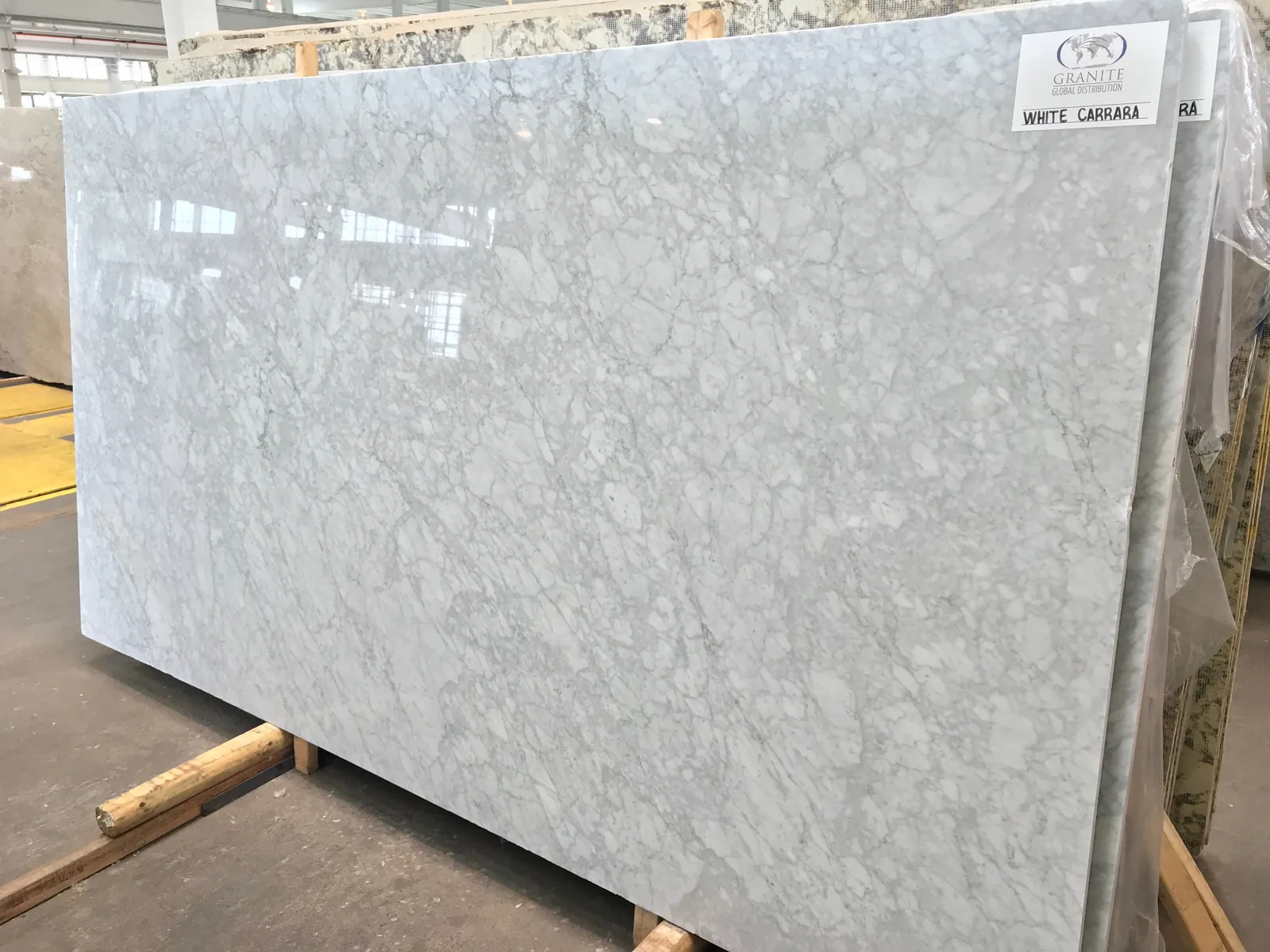
Quartzite vs Marble: The Short Answer
Quartzite and marble share a look but not a nature. Granite Global explains it this way: quartzite is mostly quartz, very hard and resistant to acids, while marble is mostly calcite, softer and sensitive to acids. If you want a white, veined countertop that tolerates lemons, wine and daily wear, quartzite is the more forgiving choice.
| Factor | Quartzite | Marble |
|---|---|---|
| Parent rock | Sandstone changed by heat and pressure | Limestone changed by heat and pressure |
| Main mineral | Quartz | Calcite |
| Typical hardness (Mohs) | Around 7 | Around 3 to 4 |
| Acid (lemon, vinegar, wine) | True quartzite does not etch | Etches: leaves dull marks |
| Scratches | Very resistant | Scratches more easily |
| Heat | Handles warm cookware well | Handles warm cookware well |
| Sealing | Needed from time to time | Needed from time to time; does not prevent etching |
| Typical look | Soft veins, often white, gray, taupe or blue | Classic soft veins, often white and gray |
Granite Global supplies the slabs; your fabricator cuts, finishes and installs them, so share the exact material name with them once you choose.
How Quartzite and Marble Form
Granite Global customers are often surprised that both stones are metamorphic, meaning heat and pressure deep underground transformed an older rock. The difference is the starting rock. Sandstone, rich in quartz grains, becomes quartzite. Limestone, rich in calcite, becomes marble. That single difference in mineral content drives hardness, etching and care.
Quartzite is a metamorphic rock formed when quartz-rich sandstone is recrystallized by heat and pressure, producing a dense, very hard stone.
Marble is a metamorphic rock formed when limestone or dolomite is recrystallized, producing a stone made mostly of calcite or dolomite minerals.
Because calcite is soft and reacts with acid, marble develops a patina of small etches and scratches over the years. Quartz is hard and chemically stable, so true quartzite keeps its polish far longer under the same use.
A third white stone sits between these two. Our guide to marble vs dolomite explains where dolomite fits in hardness and care.
Etching, Scratches and Stains in a Busy Kitchen
Etching is the biggest practical difference Granite Global sees between the two stones. Acidic foods like lemon juice, vinegar, tomato sauce and wine dissolve a thin layer of calcite in marble, leaving a dull spot even when the stone is sealed. True quartzite does not etch, and it resists scratches far better than marble.
Etching is a dull, lighter mark left when an acid reacts with calcium carbonate minerals on the surface of a stone; it is surface damage, not a stain.
Acids
Marble etches on contact with acids. True quartzite stays unchanged with normal kitchen spills.
Scratches
Marble can scratch from pottery and grit. Quartzite resists scratching from daily use.
Stains
Both absorb some oil if unsealed. A good sealer slows stains on either stone.
Honed marble hides etches better than polished marble, because the etch blends into the matte surface instead of interrupting a shine.
Veining, Color and Finish: Telling Them Apart
Granite Global often hears that marble looks softer and quartzite looks crisper, and that is a useful starting point. Marble veins tend to be soft and painterly with a milky background. Quartzite often shows a glassy, crystalline depth and more varied colors. Still, looks alone are not reliable, and testing the stone is the only sure way.
| Clue | Quartzite | Marble |
|---|---|---|
| Surface depth | Often glassy, sparkly crystals in raking light | Often milky, soft and even |
| Veining | Can be crisp, linear or cloudy | Usually soft, flowing and feathered |
| Color range | White, gray, taupe, blue, green, gold | Mostly white, gray, beige and some dark tones |
| Finishes | Polished, honed or leathered | Polished or honed, sometimes leathered |
| Feel when scratched with a steel tip | Steel leaves a metal mark, not a groove | Steel can leave a groove |
Compare the real stones by browsing the quartzite slabs in stock and the marble slabs in stock before your visit.
Care and Maintenance for Each Stone
Granite Global recommends the same daily routine for both stones: warm water, a pH-neutral cleaner and a soft cloth. The difference is how much attention spills need. On marble, wipe acids immediately and accept that some etches will appear. On quartzite, the main task is resealing when a water drop test shows absorption.
| Task | Quartzite | Marble |
|---|---|---|
| Daily cleaning | pH-neutral cleaner or mild soap | pH-neutral cleaner made for stone |
| Acid spills | Wipe when convenient | Wipe immediately to limit etching |
| Sealing | When water darkens the stone | When water darkens the stone |
| Avoid | Abrasive powders, harsh chemicals | Vinegar, lemon cleaners, abrasive powders |
| Over the years | Keeps polish well | Develops a soft patina; can be re-honed |
Many homeowners in older European homes love marble precisely because of its patina; the right choice depends on whether you see wear as character or as damage.
How to Choose Between Quartzite and Marble
Granite Global suggests deciding with three honest questions: how much you cook with acids, how you feel about visible wear, and where the stone goes. Busy family kitchens usually suit quartzite. Bathrooms, fireplaces, bars and low-traffic spaces are great places for marble, where its softness matters much less than its beauty.
| Space | Better fit | Why |
|---|---|---|
| Main kitchen with daily cooking | Quartzite | Resists etching and scratches from heavy use |
| Baking station or pastry counter | Marble | Classic cool surface; etching matters less |
| Bathroom vanity | Either | Fewer acids; marble works well here |
| Fireplace surround or wall | Either | Low contact; choose purely by look |
| Bar with citrus and wine | Quartzite | Acids would etch marble quickly |
If granite is also on your list, our quartzite vs granite guide compares those two stones in the same way.
Common Mistakes When Buying a White Stone
The costliest mistake Granite Global sees is buying a soft stone believing it is quartzite, then discovering etch marks after the first dinner party. Trade names are not standardized, so a slab name alone proves nothing. Testing a sample, asking clear questions and seeing the actual slab prevent nearly every disappointment with white stone.
- Trusting the trade name instead of testing a sample for hardness and etching.
- Choosing marble for a busy kitchen without accepting that etching will happen.
- Believing a sealer prevents etching. Sealers slow stains; they do not stop acid reactions.
- Choosing from a website photo. Every slab is unique and photos are representative.
- Ignoring the finish. Polished marble shows etches more than honed marble.
- Forgetting to look at the slabs behind the first one in the bundle.
Our guide on real vs fake quartzite walks through the glass and vinegar tests step by step.
A Checklist Before You Choose Your White Stone
Granite Global recommends a short checklist before any white stone goes to your fabricator. It takes a few minutes in the warehouse, confirms what the stone really is and keeps your expectations realistic. Bring a glass tile, a small bottle of vinegar and water, and your cabinet and floor samples.
- Write down the exact material name and lot number from the slab label
- With permission, test a sample with the corner of a glass tile
- Place a drop of vinegar on a sample for a few minutes and check for a dull mark
- Do a water drop test to see how quickly the stone absorbs
- Look at the slab under daylight and indoor light
- Hold your cabinet door and floor sample against the slab
- Decide on polished, honed or leathered before the fabricator orders
When your shortlist is ready, visit our Charlotte slab warehouse; walk-ins are welcome during business hours and our team can pull slabs for you.
Questions About Quartzite vs Marble
Is quartzite harder than marble?
Yes, much harder. True quartzite is made mostly of quartz and rates around 7 on the Mohs hardness scale, while marble is made mostly of calcite and rates around 3 to 4. In a kitchen, that means quartzite resists scratches and keeps its polish much longer. Granite Global suggests a glass tile test on a sample to confirm hardness.
Does quartzite etch like marble?
True quartzite does not etch, because quartz does not react with household acids. Marble etches because calcite dissolves on contact with lemon juice, vinegar, wine and tomato. Some stones sold as quartzite contain calcite or dolomite and can etch, which is why Granite Global recommends a vinegar test on a sample before you commit to a white stone.
Can sealing stop marble from etching?
No. A penetrating sealer slows down stains by reducing how quickly liquids soak into the stone, but it does not stop the chemical reaction between acids and calcite. Marble will etch even when it is well sealed. Wiping acidic spills quickly and choosing a honed finish both make etches less noticeable over time.
Is marble a bad choice for a kitchen?
Not necessarily. Marble has been used in kitchens for centuries, and many people love the soft patina it develops. It is a poor fit only if you expect it to stay perfect. If you want a white, veined kitchen countertop that tolerates acids and heavy use, quartzite is the more forgiving natural stone.
Which costs more, quartzite or marble?
It depends on the specific stone, not the category. Both quartzite and marble range from widely available materials to rare, dramatic slabs. Thickness, slab size and how much of the slab your project uses also matter. Granite Global does not publish prices online; ask our team or your fabricator about the materials on your shortlist.
How can I tell quartzite from marble at a slab yard?
Look first, then test. Quartzite often has a glassy, crystalline depth; marble often looks milky and soft. With permission, a true quartzite sample scratches glass easily and does not react to a drop of vinegar, while marble will not scratch glass and will show a dull etch mark. Granite Global welcomes these tests on samples.
Compare Quartzite and Marble in Person
See white quartzite and marble slabs side by side in our Charlotte warehouse, test the samples and choose the stone that fits your kitchen, no appointment needed.