
Granite vs Quartz Countertops: Natural or Engineered?
The choice of granite vs quartz is really a choice between a stone the earth made and a surface a factory made. Granite Global, a family-owned stone distributor in Charlotte, NC, stocks both granite and quartz slabs, so this guide compares them the way our customers live with them: heat, stains, sealing, look, seams and how to decide.
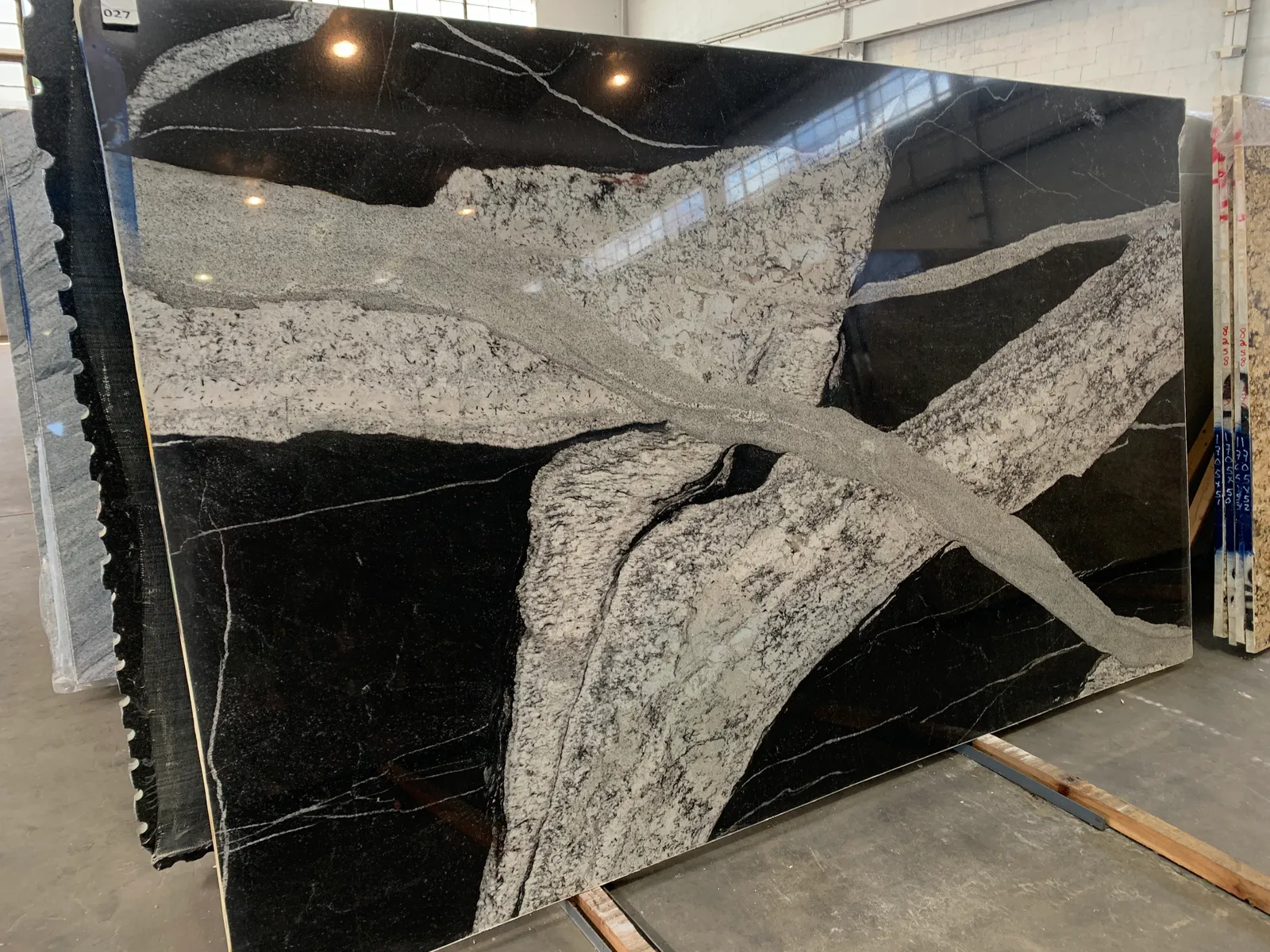
Granite vs Quartz: The Short Answer
Granite and quartz both make durable, good-looking kitchen countertops. Granite Global explains the difference simply: granite is a natural stone with a unique pattern that handles heat well and needs sealing now and then, while quartz is an engineered surface with a consistent look that never needs sealing but is more sensitive to heat.
| Factor | Granite | Quartz |
|---|---|---|
| What it is | Natural igneous stone cut from a quarry block | Engineered slab of ground quartz, resin and pigments |
| Pattern | Every slab is unique: grains, flecks, swirls | Consistent from slab to slab, often marble-look veins |
| Heat | Tolerates warm cookware well | Resin can scorch or discolor under very hot pans |
| Stains | Resists stains when sealed; light colors absorb more | Non-porous surface; resists stains without sealing |
| Sealing | Needed from time to time | Not needed |
| Sunlight and outdoors | Generally suitable for outdoor kitchens | Many quartz products are not rated for outdoor use |
| Repairs | Chips can often be filled by a fabricator | Chips can be filled, but color matching is harder |
| Best for | Natural depth, heat tolerance, outdoor use | Uniform look, low maintenance, bright solid whites |
Both materials are cut and installed by your fabricator; Granite Global supplies the slabs and helps you choose the right one before the template is made.
What Granite and Quartz Are Made Of
Granite Global stocks two very different materials under the same countertop roof. Granite formed when magma cooled slowly underground, growing crystals of feldspar, quartz and mica. Quartz countertops are made in a factory by mixing crushed quartz, usually around 90 percent by weight, with polymer resin and pigments, then pressing and curing it into slabs.
Granite is a coarse-grained natural igneous stone, made mostly of feldspar and quartz, quarried in large blocks and sawn into slabs for countertops, islands and vanities.
Quartz (engineered stone) is a manufactured slab of ground natural quartz held together by resin, with pigments added to create solid colors or marble-like veins.
This difference explains almost everything else in this guide. The resin in quartz is what makes it non-porous and stain resistant, and it is also what makes quartz more sensitive to heat and strong sunlight. The crystals in granite are what give it depth and a pattern no factory can repeat exactly.
Do not confuse quartz with quartzite, a natural stone with a similar name. Our guide to quartz vs quartzite explains why the two are not the same material at all.
Heat, Stains and Scratches in a Real Kitchen
In daily cooking, Granite Global sees granite and quartz perform very similarly for scratches, since both are hard surfaces. The real differences show up with heat and stains. Granite is more forgiving with hot cookware, and quartz is more forgiving with spills, because its resin surface does not absorb oil, wine or coffee.
Heat
Granite handles warm pans well. On quartz, always use a trivet, because high heat can scorch the resin.
Stains
Quartz shrugs off most spills. Sealed granite resists stains too, especially darker and denser colors.
Scratches
Both resist everyday knives and pots. Cut on a board anyway to protect the surface and your knives.
Sudden temperature change can stress any stone, so even on granite we suggest a trivet for pans straight from a very hot oven. On quartz, slow cookers, air fryers and electric griddles that sit in one spot for hours are a common cause of discoloration; place them on a board or heat pad.
If you cook often at high heat, granite gives you more room for error; if your household spills more than it sears, quartz may feel easier.
Look and Style: Natural Variation or Consistent Color
Granite Global customers usually decide on look before anything else. Granite offers natural depth, movement and a huge color range, from quiet whites to deep blues and blacks, and no two slabs match exactly. Quartz offers consistency: solid whites, subtle grays and printed marble-look veins that repeat predictably from slab to slab.
| Design goal | Better fit | Why |
|---|---|---|
| A one-of-a-kind island | Granite | Each slab has its own pattern and mineral depth |
| A bright, solid white | Quartz | Engineered color can be very uniform |
| Marble look with low maintenance | Quartz | Printed or poured veins without etching |
| Bold color: blue, green, gold | Granite | Natural minerals create colors quartz rarely imitates well |
| Matching many rooms or units | Quartz | Slabs from the same product look alike |
| Textured, leathered surface | Granite | Many granites are offered in a leathered finish |
Browse the granite slabs in stock and the quartz slabs in stock to see the full range of colors before you visit.
Cleaning and Maintenance Over the Years
Granite Global tells customers that both surfaces are easy to clean with warm water and mild dish soap. The difference is sealing: granite needs a penetrating sealer from time to time, which takes a few minutes, while quartz never does. Quartz, however, should be kept away from harsh solvents and strong alkaline cleaners that can dull resin.
| Task | Granite | Quartz |
|---|---|---|
| Daily cleaning | Warm water and mild dish soap | Warm water and mild dish soap |
| Sealing | When the water drop test shows absorption | Never |
| Avoid | Bleach, vinegar and abrasive powders on polished stone | Oven cleaner, paint strippers, high-pH degreasers |
| Heat protection | Trivet for very hot pans | Trivet or board every time |
| Sticky residue | Plastic scraper and soapy water | Plastic scraper and soapy water |
Many darker granites rarely absorb water at all, so sealing is less work than it sounds; a water drop test every few months tells you when it is due.
How to Choose Between Granite and Quartz
Granite Global suggests answering four questions in order: how you cook, how you clean, where the countertop goes and what look you want. Heavy cooking and outdoor spaces lean toward granite. Busy households that want zero sealing and a uniform color lean toward quartz. The look then narrows the choice to specific slabs.
Think about heat
If pans often go straight from stove to counter, granite is more forgiving.
Think about upkeep
If sealing every year or two feels like a chore, quartz removes that task.
Check the location
For outdoor kitchens or sunny rooms, granite is usually the safer pick.
Pick the look
Unique movement points to granite; a calm, repeatable pattern points to quartz.
If you also like the look of quartzite, read our quartzite vs granite comparison, and for patios see our guide to outdoor kitchen countertops.
Common Mistakes When Comparing Granite and Quartz
The mistakes Granite Global sees most often come from comparing photos instead of slabs and from assuming one material is simply better. Each material has strengths, and the wrong choice usually happens when someone ignores heat, sunlight or the real slab. A short visit to the warehouse prevents most of these problems.
- Choosing granite from a small photo. Photos are representative; every granite slab is different.
- Assuming quartz is heatproof. Its resin can scorch, so trivets are not optional.
- Putting quartz outdoors or under strong sun without checking that the product is rated for it.
- Assuming all granite stains easily. Dense, dark granites absorb very little.
- Forgetting seams. Long islands may need two slabs, and veined quartz needs careful seam planning too.
- Choosing a countertop without the cabinet door, floor sample or backsplash tile in hand.
Ask our team to pull the slabs behind the first one in a bundle; the slab you love is often two or three deep.
A Checklist for Comparing Slabs in Person
Granite Global recommends seeing granite and quartz on the same visit, under the same light, with your samples in hand. A slab that looks right on a phone screen can feel warmer, cooler or busier in person. This checklist keeps the comparison fair and gives your fabricator everything they need afterwards.
- Bring a cabinet door, flooring sample and backsplash tile
- Look at each slab in daylight near the warehouse door and under indoor light
- Compare a granite and a quartz option in the same color family side by side
- Ask about available thickness (2 cm or 3 cm) and finish for each material
- Photograph each slab with its label and lot number
- Do a water drop test on a granite sample to see how fast it absorbs
- Send your fabricator the exact material names you shortlisted
When your list is ready, visit our Charlotte slab warehouse during business hours; walk-ins are welcome and no appointment is needed.
Questions About Granite vs Quartz
Is granite or quartz more durable?
Both are very durable for kitchen countertops. Granite is more tolerant of heat and works outdoors, while quartz resists stains without sealing. Neither scratches easily in daily use. Granite Global suggests choosing by how you cook and clean: heavy cooks and outdoor projects usually favor granite, and households that want zero sealing usually favor quartz.
Can I put a hot pan on quartz?
It is not recommended. Quartz contains polymer resin, and very hot pans or appliances that sit in one spot for a long time can scorch or discolor it. Always use a trivet or heat pad on quartz. Granite handles warm cookware better, though a trivet is still wise for pans straight from a very hot oven.
Does quartz need to be sealed?
No. Quartz is a non-porous engineered surface, so it does not absorb liquids and never needs sealing. Clean it with warm water and mild dish soap, and avoid harsh solvents and high-pH degreasers that can dull the resin. Granite, by contrast, benefits from a penetrating sealer whenever a water drop test shows absorption.
Which looks more natural, granite or quartz?
Granite, because it is natural stone. Its crystals create depth and a pattern that no two slabs share. Quartz can imitate marble and stone very convincingly, but its pattern is designed and repeats more predictably. Some homeowners prefer that consistency, especially for bright whites. Seeing both side by side at Granite Global makes the difference clear.
Is quartz better for a white kitchen?
Quartz is a strong choice if you want a solid, bright white with no movement, because engineered color is very uniform. If you want a white countertop with natural character, white granites and quartzites offer depth that quartz cannot copy. Granite Global stocks both, so you can compare white quartz and white granite under the same light.
Can granite or quartz be used outdoors?
Granite is generally suitable for outdoor kitchens because it tolerates sun, heat and temperature changes. Many quartz products are not rated for outdoor use, since strong sunlight can fade or yellow the resin over time. Check the specific product before using quartz outside, and ask your fabricator about sealing granite for outdoor exposure.
Compare Granite and Quartz Side by Side
Shortlist a few slabs online, then walk into our Charlotte warehouse and see the real granite and quartz next to your cabinet door, no appointment needed.