
Outdoor Kitchen Countertops: Which Stone Holds Up
Outdoor kitchen countertops live a harder life than any counter indoors: direct sun, summer heat, rain, pollen, grill grease and the occasional freezing night. Granite Global stocks granite, quartzite, marble, quartz, dolomite and soapstone slabs in Charlotte, and this guide compares how each one behaves outside so you can choose a stone that still looks right after many seasons on the patio.
- Granite, quartzite and soapstone slabs
- Inventory updated every day
- Walk-ins welcome
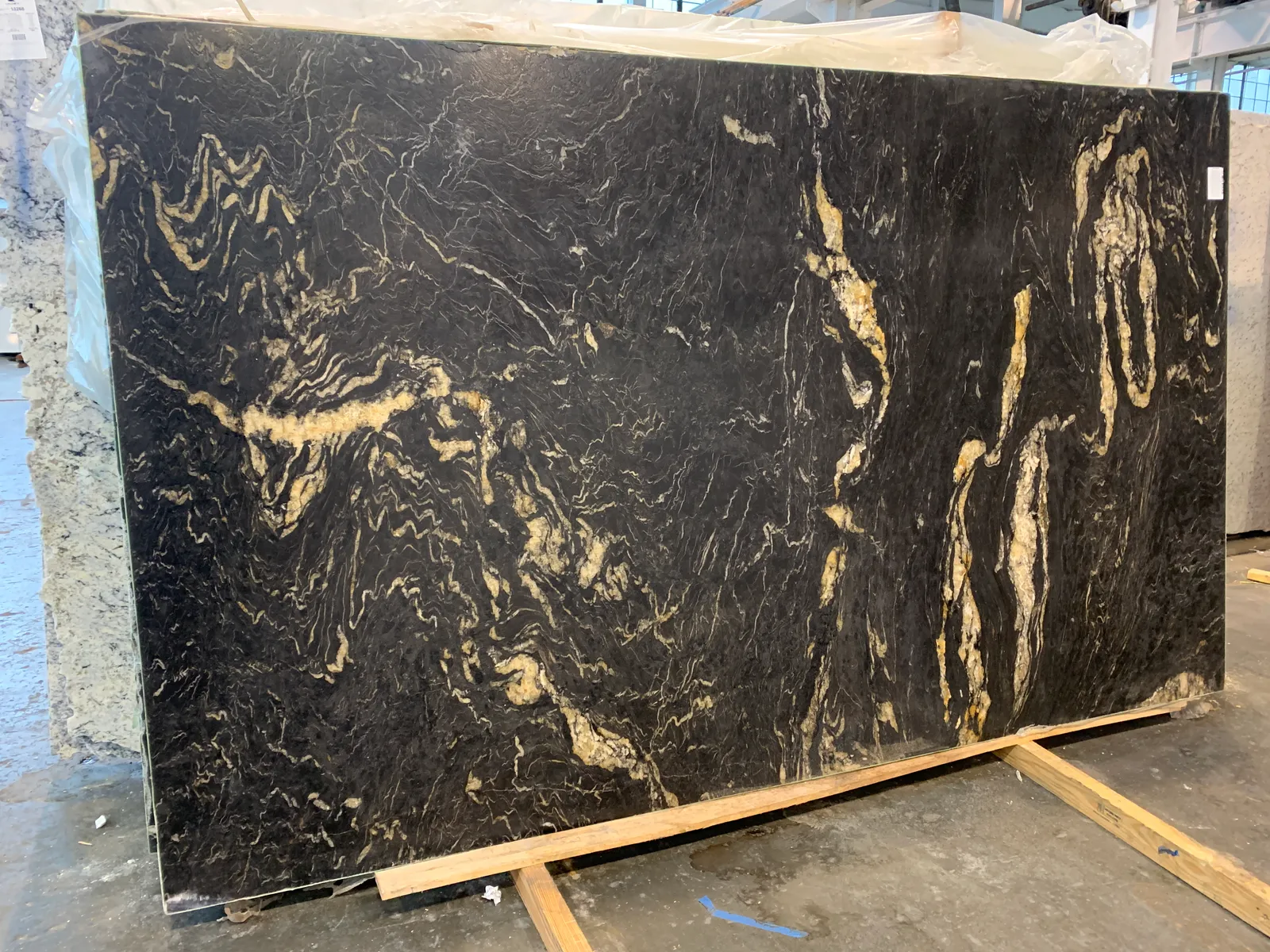
What Outdoor Kitchen Countertops Have to Survive
Granite Global reminds homeowners that an outdoor countertop faces four forces an indoor one never sees: ultraviolet light, wide temperature swings, standing water and freeze-thaw cycles. The right stone is dense, stable in sunlight and not bothered by heat, and it is sealed so water and grease stay on the surface instead of soaking in.
Sun and UV light
Natural stone is colorfast in sunlight. Resin-based materials can yellow or fade over time when exposed to direct UV every day.
Heat and temperature swings
Grills, side burners and summer sun heat the stone. Dark slabs in full sun can get very hot to the touch by midafternoon.
Rain and standing water
Water that soaks into a porous stone can carry dirt, pollen and minerals with it, leaving dark spots or rings behind.
Freeze-thaw cycles
Water trapped in pores expands when it freezes. Over many winters that can open small fissures in an absorbent stone.
In the Charlotte area, summers are hot and humid and winters bring occasional hard freezes, so a dense stone with a good seal is the safest starting point for any outdoor kitchen.
Outdoor Countertop Materials Compared Side by Side
Granite Global compares the six materials it stocks on the factors that matter outside. Granite, soapstone and true quartzite rank highest for outdoor kitchens. Dolomite can work in a covered space with care. Marble and quartz are usually better kept indoors, marble because it weathers and quartz because sunlight can discolor its resin.
| Material | Sun and UV | Heat from grills | Water and freezing | Outdoor fit |
|---|---|---|---|---|
| Granite | Colorfast | Handles heat well | Good when sealed | Strong choice, covered or open |
| Quartzite | Colorfast | Handles heat well | Good when sealed; check it is true quartzite | Strong choice, covered or open |
| Soapstone | Colorfast, darkens with use | Very heat tolerant | Dense and low absorption | Strong choice; scratches easily |
| Dolomite | Colorfast | Handles heat well | More absorbent; seal often | Covered areas, with care |
| Marble | Colorfast but polish dulls | Handles heat | Etches from acidic rain and drinks | Usually not recommended |
| Quartz (engineered) | Resin can yellow or fade | Resin can scorch or discolor | Not porous | Most makers advise against it |
These are general behaviors of each stone family; individual slabs vary, so ask our team about the specific material you like before you commit to it outdoors.
Why Granite Is the Usual Outdoor Kitchen Choice
Granite Global sees granite chosen for most outdoor kitchens because it is a dense igneous stone that formed under intense heat. It does not mind a hot grill grate set down for a moment, its color does not fade in the sun, and once sealed it resists the grease and water an outdoor counter collects all season.
Granite also gives you the widest range of colors and patterns, from quiet salt-and-pepper greys to bold movement. Browse the granite slabs in stock to see the current range, and compare it with indoor options in our guide to granite vs quartz countertops.
- Medium and darker granites hide pollen, dirt and grill splatter between cleanings
- Lighter granites stay cooler in full sun than black or very dark slabs
- Busy patterns disguise water spots better than solid colors
- A leathered or honed finish reduces glare on a sunny patio
If your outdoor kitchen sits in direct afternoon sun, consider a mid-tone granite: it balances heat on the surface with how well it hides daily dirt.
Soapstone and Quartzite as Outdoor Countertop Options
Granite Global points to soapstone and true quartzite as the other two strong outdoor options. Soapstone is dense, very heat tolerant and does not etch, though it scratches and darkens with use. Quartzite is hard and colorfast, but some slabs sold as quartzite are softer stones, so confirming what you are buying matters before it goes outside.
- Soapstone
- Soft to the touch and easy to scratch, but scratches can usually be sanded or oiled out. It develops a darker patina over time, which many owners like on an outdoor counter. Read our soapstone countertops pros and cons for real kitchens before you decide.
- Quartzite
- A metamorphic stone made mostly of quartz, harder than granite on average and stable in sunlight. Some quartzites are more absorbent than others, so a water drop test on a sample helps decide how often to seal.
- Dolomite
- Often sold for its marble-like look with more hardness than marble. It can work in a covered outdoor kitchen, but it is more absorbent than granite and needs regular sealing.
Soapstone availability changes often, so check the soapstone slabs in stock or ask our team when a new lot is coming before you plan around it.
Which Finish Works Best for Outdoor Kitchen Countertops
Granite Global usually suggests a leathered or honed finish for outdoor kitchen countertops. A high polish looks striking but reflects strong sunlight and shows water spots and fingerprints. A textured or matte surface cuts glare, hides spots and feels less slick when wet, while still sealing well against grease and water.
| Finish | Glare in sun | Water spots | Feel when wet |
|---|---|---|---|
| Polished | High | Most visible | Smooth and slick |
| Honed | Low | Less visible | Smooth, less slick |
| Leathered | Low | Least visible | Textured grip |
Not every material comes in every finish, and some slabs are offered in a dual finish, so ask which finishes are in stock for the stone you choose. Our guide to polished, honed and leathered finishes explains each one in more detail.
How to Choose an Outdoor Kitchen Stone, Step by Step
Granite Global recommends deciding in a simple order: first how exposed the kitchen is, then the material family, then the color and finish, and last the actual slab. Working in that order narrows the choice quickly and avoids falling in love with a slab that will not hold up in your space.
Rate the exposure
Note whether the counter is fully open, under a pergola or under a solid roof, and how many hours of direct sun it gets.
Pick the material family
Start with granite, quartzite or soapstone for open areas. Consider dolomite only for covered spaces.
Choose color and finish
Mid-tones hide dirt and stay cooler. A leathered or honed finish reduces glare and water spots.
See the real slab
Visit the warehouse and look at the actual slab in daylight, including the back and edges, before your fabricator measures.
When you visit our Charlotte slab warehouse, bring photos of the patio and your outdoor cabinet layout; seeing the slab next to those photos makes the color decision much easier.
Common Outdoor Countertop Mistakes to Avoid
Granite Global hears about the same outdoor countertop mistakes again and again: choosing an indoor-only material, picking a very dark polished slab for full sun, skipping the sealer and forgetting about drainage. Each one is easy to avoid if you think about the stone outside, not in a showroom.
- Using engineered quartz in full sun, where the resin can yellow or fade over time
- Choosing a black polished slab for a spot that gets afternoon sun, then finding it too hot to touch
- Putting marble outside and watching rain and drinks etch the polish
- Skipping the sealer or never resealing, so grease and pollen stain the stone
- Leaving a flat top with no slope or overhang, so water pools along the edge
- Choosing from a small sample instead of the full slab in natural light
Your fabricator will advise on overhangs, drip edges and support for the outdoor cabinets, since those details depend on the structure as much as on the stone.
Caring for Stone Countertops in an Outdoor Kitchen
Granite Global suggests treating outdoor stone a little more carefully than indoor stone. Seal it before the first season, test the seal with a few drops of water each spring, wipe grease and drinks promptly, and cover the counter during long periods without use. Most care problems outside come from neglect, not from the stone itself.
- Seal granite, quartzite and dolomite before the first outdoor season
- Do a water drop test each spring; if the stone darkens quickly, reseal
- Clean with a pH-neutral stone cleaner, not bleach or vinegar
- Wipe up grease, wine and citrus the same day
- Use a cover in winter or during long trips
- Oil soapstone if you want an even, darker patina
For a step-by-step sealing routine, read how to seal granite countertops and how often; the same test works for most porous natural stones used outdoors.
Questions About Outdoor Kitchen Countertops
What is the best stone for an outdoor kitchen countertop?
Granite is the most common choice because it is dense, colorfast in sunlight and handles heat well once sealed. Soapstone and true quartzite are also strong options. Granite Global stocks all three in Charlotte, and the right pick depends on how much sun and rain your counter gets and the look you want.
Can quartz countertops be used outdoors?
Most quartz manufacturers advise against outdoor use because the resin that binds the quartz can yellow, fade or discolor under direct sunlight over time. In a fully enclosed, shaded space it may be less of a concern, but for an open patio Granite Global suggests granite, quartzite or soapstone instead.
Does granite crack in freezing weather?
Dense, well-sealed granite handles normal freeze-thaw cycles in climates like the Charlotte area. Problems come when water soaks into an unsealed or very absorbent stone and freezes inside. Sealing before winter, keeping the surface draining and covering the counter during long cold spells reduce the risk considerably.
Does dark granite get hot in the sun?
Yes. Black and very dark slabs absorb more sunlight and can get uncomfortably hot by midafternoon in summer. If your counter sits in full sun, a lighter or mid-tone granite, or a covered area, keeps the surface more comfortable. Granite Global can show you lighter options during a visit.
How often should outdoor stone be sealed?
It depends on the stone and the exposure. A simple test is to place a few drops of water on the surface: if the stone darkens within a few minutes, it is time to reseal. Many owners test every spring. Dense granites may need sealing less often than lighter, more absorbent ones.
Is marble a good choice for an outdoor kitchen?
Marble is usually not recommended outdoors. It is a calcium-based stone, so acidic rain, citrus, wine and some cleaners etch the surface, and weathering dulls a polish over time. If you love the marble look, Granite Global suggests looking at white quartzites or granites with soft movement for outdoor use.
Which finish is best for an outdoor countertop?
A leathered or honed finish usually works best outside. Both reduce glare in strong sunlight, hide water spots better than a polish and feel less slick when wet. Not every material is available in every finish, so ask the Granite Global team which finishes are in stock for the slab you like.
Find a Stone That Holds Up Outside
Browse granite online, then walk into our Charlotte warehouse to see the real slab in daylight, no appointment needed.