
Can You Put Hot Pans on Quartz Countertops?
Putting hot pans on quartz is one of the most common ways engineered countertops get damaged, and the reason is the resin that holds the quartz together. Granite Global stocks quartz alongside granite, quartzite and soapstone slabs in Charlotte, so we see the question from both sides. This guide explains what heat does to quartz, what the damage looks like, how natural stones compare and the simple habits that protect any countertop.
- Quartz, granite, quartzite and soapstone
- Inventory updated every day
- Walk-ins welcome
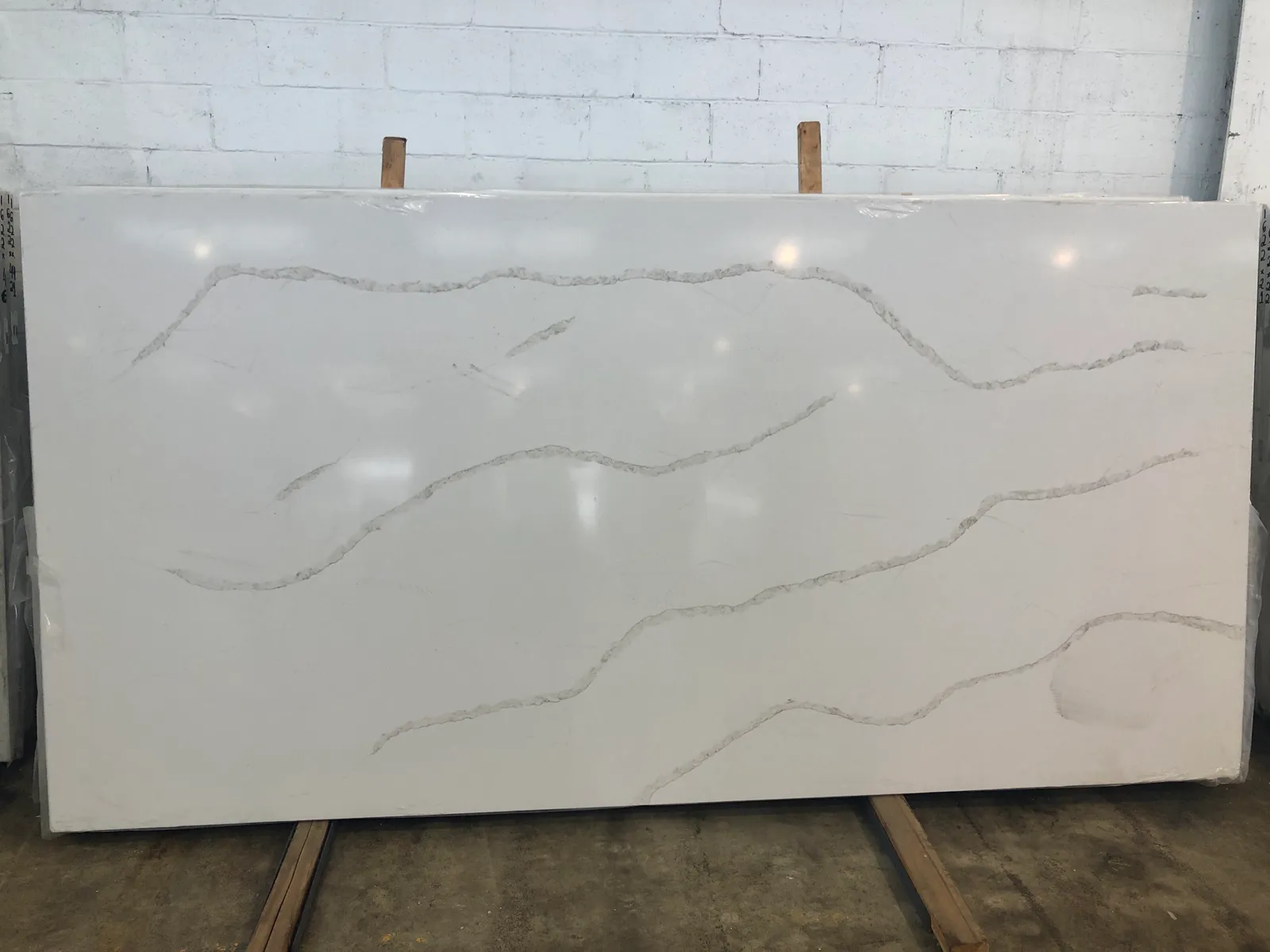
Can You Put Hot Pans on Quartz? The Short Answer
Granite Global's short answer is no: do not set hot pans directly on quartz countertops. Quartz is engineered from crushed quartz bound with polymer resin and pigments, and that resin is sensitive to concentrated heat. A pan straight off the burner or out of the oven can leave a permanent mark or even crack the slab.
Engineered quartz is a manufactured surface made mostly of ground natural quartz mixed with polymer resins and pigments, pressed into slabs and cured. The quartz gives hardness; the resin holds it together and is the part that reacts to heat.
Quartz is still an excellent countertop for many kitchens: it is not porous, it resists stains and it needs no sealing. The key is simply to keep heat off it. Browse the quartz slabs in stock if that trade-off suits the way you cook.
Most quartz manufacturers recommend trivets or hot pads for cookware, and heat damage is commonly excluded from their warranties, so check the maker's care guide for your specific slab.
Why Quartz Resin Reacts to Heat
Granite Global explains that quartz itself handles heat, but the resin binder does not. Polymer resins soften and can scorch at temperatures that cookware easily reaches. Heat also expands the area under the pan faster than the cooler stone around it, and that uneven expansion, called thermal shock, can open a crack.
- Scorching
- The resin at the surface burns or changes color, leaving a mark that matches the shape of the pan.
- Thermal shock
- A hot spot expands while the stone around it stays cool. The stress can crack the slab, often near a cutout or seam.
- Slow heat
- Appliances that run hot for a long time, such as some slow cookers or air fryers, can discolor resin even without direct contact with a pan.
Darker or lighter quartz is not more heat resistant in itself; the color only changes how visible a mark is once it happens.
What Heat Damage on Quartz Looks Like
Granite Global hears three typical descriptions of heat damage on quartz: a pale white or cloudy ring, a yellow or brown burn mark, and a hairline crack running from the hot spot. Marks are usually permanent because the change happens inside the resin, not on top of it, so cleaning alone does not remove them.
| What you see | Usual cause | Can it be fixed? |
|---|---|---|
| White or cloudy ring | Resin changed by a hot pan bottom | Sometimes improved by a professional, rarely invisible |
| Yellow or brown mark | Resin scorched by high heat | Usually permanent |
| Hairline crack | Thermal shock from a concentrated hot spot | Can be filled; often still visible |
| Dull patch | Repeated heat from an appliance | Sometimes polished by a professional |
If you see damage, talk to a stone fabricator or repair specialist before trying abrasive pads or chemicals, which can make the mark larger.
How Quartz Compares With Natural Stone on Heat
Granite Global compares the stones it stocks by how they handle a hot pan. Granite, quartzite and soapstone formed under heat and pressure deep in the earth and tolerate hot cookware far better than quartz. Marble and dolomite handle heat too, but they are softer and more sensitive to spills, which matters around the stove.
| Material | Hot pan tolerance | Main risk near the stove | Trivet advised? |
|---|---|---|---|
| Quartz (engineered) | Low; resin can scorch | Burn marks and cracks | Always |
| Granite | High | Thermal shock is rare but possible; sealer can be affected | Good habit |
| Quartzite | High | Sealer can be affected | Good habit |
| Soapstone | Very high | Scratches from cookware | Optional |
| Marble | Good | Etching from acidic spills | Good habit |
| Dolomite | Good | Spills and sealer wear | Good habit |
For a broader comparison of the two most popular choices, read granite vs quartz countertops, and if you are weighing two similar names, see quartz vs quartzite.
Heat-Friendly Stones for Cooks Who Move Fast
Granite Global suggests looking at granite, quartzite or soapstone if you often slide a hot pan aside without thinking. All three are natural stones that tolerate heat well. Soapstone is the most forgiving with heat but scratches easily, granite offers the widest color range, and quartzite gives a marble-like look with high hardness.
Granite
Dense, heat tolerant and available in many colors. Needs occasional sealing.
Quartzite
Hard, heat tolerant and often veined like marble. Seal as the slab requires.
Soapstone
Very heat tolerant and does not etch. Soft, so it scratches and patinas.
Soapstone has a very different feel from other stones; our guide to soapstone countertops pros and cons for real kitchens explains what to expect day to day.
Habits That Protect Quartz and Stone From Heat
Granite Global recommends a few simple kitchen habits that protect any countertop from heat. Keep trivets where you cook, place heat-producing appliances on a board or mat, and never move a pan straight from the oven to the counter. These habits cost almost nothing and prevent the most common, and most expensive, kind of quartz damage.
Keep trivets within reach
Store two trivets or hot pads next to the stove and the oven so using them becomes automatic.
Raise hot appliances
Put slow cookers, air fryers, toaster ovens and griddles on a heat-resistant board.
Let pans land on the stove
Move hot pans to a cool burner or a trivet, never directly onto the counter.
Watch the seams and cutouts
Edges near the cooktop and sink are more vulnerable to thermal shock, so be extra careful there.
Heat is only one part of countertop care; spills, cleaners and sealing matter just as much, especially on natural stone.
Common Mistakes With Hot Pans and Quartz
Granite Global sees the same heat mistakes repeat: trusting that quartz is heatproof because it contains quartz, using a thin cutting board as a trivet, running hot appliances directly on the counter and trying to scrub away a burn mark. Knowing them in advance is the easiest way to keep a quartz countertop looking new.
- Assuming quartz behaves like natural quartzite or granite under heat
- Placing a pan from the oven directly on the counter, even briefly
- Running an air fryer or slow cooker on bare quartz for hours
- Using a thin plastic board as a heat barrier
- Scrubbing a burn mark with abrasive pads, which can dull the surface around it
If heat resistance is a top priority in your kitchen, choose the material with that in mind instead of relying on habits alone.
Checklist: Choosing a Countertop if You Cook Hot
Granite Global recommends a short checklist for anyone who cooks often and is deciding between quartz and natural stone. Thinking about how you actually use the stove and oven tells you whether quartz with careful habits fits you, or whether a heat-friendly natural stone is the more relaxed choice.
- Do you often set pans down without looking?
- Do you run countertop appliances for long periods?
- Is the counter next to the cooktop the main prep area?
- Are you comfortable sealing natural stone occasionally?
- Do you prefer a consistent look or natural variation?
- Have you seen the real slabs side by side?
To compare quartz with granite, quartzite and soapstone in person, check the live inventory and visit our Charlotte slab warehouse, where walk-ins are welcome during business hours.
Questions About Hot Pans on Quartz
Can you put a hot pan on quartz for a second?
It is not a good idea. Even a short contact with a pan straight from the burner or oven can scorch the resin or cause thermal shock, and the damage is usually permanent. Granite Global recommends always using a trivet or hot pad on quartz, no matter how briefly the pan will sit.
What temperature damages quartz countertops?
Manufacturers publish different heat limits, and they depend on the product, so check the care guide for your specific quartz. As a rule, the resin is the weak point, and cookware coming off a burner or out of the oven is hot enough to damage it. Treat any hot cookware as a risk.
Can heat damage on quartz be repaired?
Sometimes partly. A professional may reduce a light discoloration or fill a crack, but burn marks in the resin are usually permanent and repairs often remain visible. In severe cases, a section may need replacing. Prevention with trivets is far easier than repair.
Is granite better than quartz for heat?
Yes. Granite is a natural stone that formed under intense heat and tolerates hot cookware far better than quartz. A trivet is still a good habit to protect the sealer and avoid rare thermal shock. Granite Global stocks both, so you can compare them side by side in Charlotte.
Is quartzite the same as quartz for heat?
No. Quartzite is a natural metamorphic stone with no resin, so it handles heat much better than engineered quartz. The names sound alike but the materials are very different. Some stones sold as quartzite are softer, so confirm what you are buying with your fabricator or our team.
Can I use an air fryer or slow cooker on quartz?
Place them on a heat-resistant board or mat instead of bare quartz. These appliances run hot for a long time and can discolor the resin even without a pan touching the surface. The same habit is a good idea on natural stone to protect the sealer.
Compare Quartz and Natural Stone in Person
Check today's inventory, then walk into our Charlotte warehouse to see quartz, granite, quartzite and soapstone slabs side by side.