
Real vs Fake Quartzite: How to Tell Before You Buy
Telling real vs fake quartzite apart matters because a soft marble or dolomite sold as quartzite will etch and scratch in ways true quartzite never does. Granite Global, a family-owned stone distributor in Charlotte, NC, stocks quartzite slabs and welcomes simple tests on samples, so this guide shows the glass test, the acid test and the questions to ask before you buy.
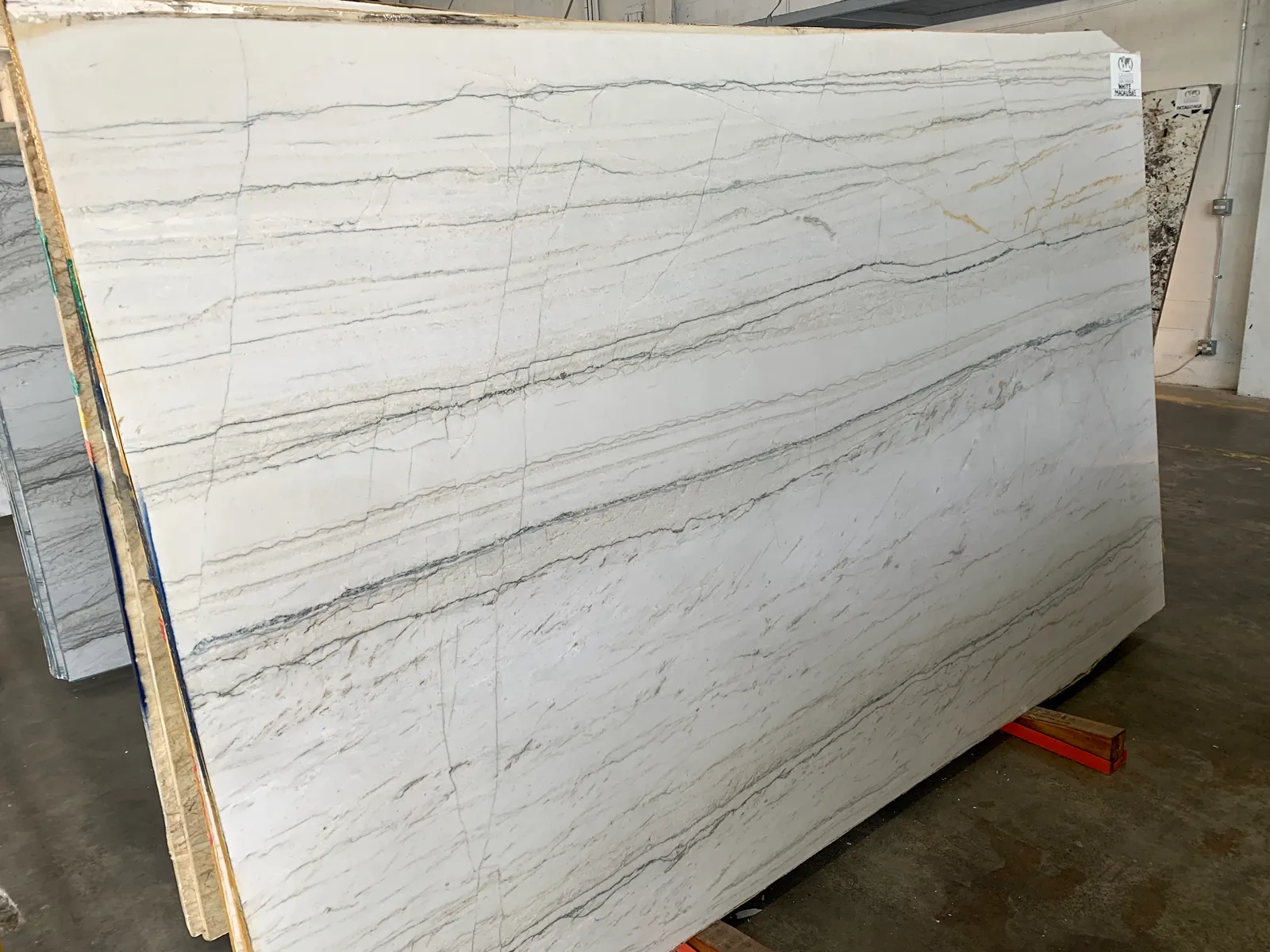
Real vs Fake Quartzite: The Short Answer
Real quartzite is mostly quartz, so it is hard enough to scratch glass and does not react to acids. Granite Global explains that so-called fake quartzite is usually not a forgery but a mislabel: a marble or dolomite sold under a quartzite name. Those stones are softer, can etch with lemon or vinegar and need more careful use.
| Test or trait | True quartzite | Marble or dolomite sold as quartzite |
|---|---|---|
| Main mineral | Quartz | Calcite or dolomite |
| Typical hardness (Mohs) | Around 7 | Around 3 to 4 |
| Glass scratch test | Scratches glass easily | Does not scratch glass |
| Vinegar or lemon test | No reaction, no dull mark | Etches: dull mark, sometimes fizzing |
| Steel knife tip | Leaves a metal streak that wipes off | Can leave a groove |
| Kitchen behavior | Resists etching and scratches | Etches and scratches over time |
Dolomite is not a bad stone; it is simply different. The problem is only buying it with the wrong expectations. If granite is also on your list, our quartzite vs granite guide compares those two hard stones.
Why Some Stones Are Sold as Quartzite
Granite Global sees mislabeling happen for an ordinary reason: stone trade names are not regulated, and a name often follows a slab from the quarry through several sellers. Quartzite has a strong reputation for hardness, so white, veined stones are sometimes marketed with the word. The label then travels further than the geology does.
Soft quartzite is an informal trade term for a stone sold as quartzite that contains enough calcite or dolomite to etch or scratch more easily than true quartzite.
Some stones are genuinely mixed. A slab can be mostly quartz with areas of carbonate minerals, so one part of a slab may react to acid while another does not. That is why testing more than one spot, or testing a sample from the same lot, gives a more honest picture than one quick check.
If you are still deciding between the two white stones, our guide to quartzite vs marble explains how each one behaves in a kitchen.
The Glass Scratch Test, Step by Step
The glass scratch test is the first check Granite Global recommends, because quartz is harder than ordinary glass and calcite is softer. Pressing the sharp edge of a glass tile against the stone shows hardness in seconds. Do it only on a sample or an area the warehouse approves, never on the face of a slab.
Get a sample
Ask for a sample or an approved test spot from the same material and lot.
Clean the surface
Wipe off dust so grit does not fool the result.
Press and drag
Hold a glass tile at an angle and drag its sharp edge firmly across the stone.
Check the glass
Run a fingernail over the glass. A real groove in the glass means the stone is harder than glass.
Read the result on the glass, not on the stone. Softer stones may leave a powdery line of glass or stone dust that looks like a scratch but wipes away. True quartzite cuts a groove you can feel in the glass.
Test more than one spot if the slab has bands of different color, because veins and background can contain different minerals.
The Vinegar and Lemon Etch Test
The acid test is the second check Granite Global recommends, because it shows how the stone will react to lemon, wine and tomato in a real kitchen. A few drops of white vinegar or lemon juice on a sample for several minutes reveal carbonate minerals: a dull, lighter mark means the stone will etch over time.
Place the drops
Put a few drops of white vinegar or lemon juice on a polished sample.
Wait and watch
Wait five to ten minutes. Fizzing suggests calcite, as in many marbles.
Wipe and rinse
Wipe the acid off and rinse the spot with clean water, then dry it.
Check in raking light
Tilt the sample under a light. A dull ring or spot means the stone etches.
Never test acid on the face of a polished slab; an etch is permanent surface damage until a fabricator repolishes it.
Questions to Ask Before You Buy Quartzite
Granite Global encourages customers to ask direct questions about any white stone, and a good supplier answers them without hesitation. The goal is not to catch anyone out but to match the stone to your kitchen. Clear answers about the stone type, finish, thickness and testing give you and your fabricator the confidence to proceed.
- Is this stone listed as quartzite, dolomite or marble in your system?
- May I test a sample from the same material with glass and vinegar?
- Which finishes and thicknesses are available for this material?
- Are there resin-filled fissures or areas I should look at closely?
- Can I see the other slabs in the same lot to compare the pattern?
- What is the exact name and lot number I should give my fabricator?
Our slab yard visit checklist lists what to bring and ask on the day, so nothing is forgotten.
Visual Clues That Point to Real Quartzite
Looks alone cannot prove a stone is quartzite, but Granite Global points customers to a few useful clues before testing. True quartzite often has a glassy, crystalline sparkle in raking light and feels very hard and cool. Marble and dolomite tend to look milkier and softer. Use these clues to decide which samples deserve a test.
Glassy depth
Tilt a flashlight across the surface. Quartzite crystals often sparkle like sugar or glass.
Milky background
A soft, opaque, milky background is more typical of marble and dolomite.
Pits and fissures
Quartzite can show small natural pits and fissures, sometimes filled with resin.
Honed surface feel
On honed samples, very hard stones resist a steel tip; soft ones show a groove.
Compare these clues on the quartzite slabs in stock, then confirm on samples during your visit.
Common Mistakes When Testing Quartzite
Granite Global sees well-meaning buyers reach the wrong conclusion because of small testing mistakes. Reading the stone instead of the glass, testing only one spot, or skipping the rinse after an acid test can all mislead. A careful two-minute test is worth more than a quick guess, and it protects the slab too.
- Testing on the face of a slab instead of a sample or approved spot.
- Mistaking a powdery line on the stone for a scratch in the glass.
- Testing only the background and not the veins, or the reverse.
- Reading the acid test without rinsing and checking in raking light.
- Assuming sealer will make a soft stone behave like quartzite.
- Relying on the trade name or a website photo instead of the actual slab.
If a stone tests soft but you love it, that is fine: choose it knowingly, pick a honed finish if you want etches to show less, and plan your care routine.
A Checklist to Confirm Real Quartzite
Granite Global recommends this checklist for every white or light quartzite before it goes to a fabricator. It confirms hardness, acid resistance and absorption, and it records the information your fabricator needs. Bring a glass tile, small bottles of vinegar and water, a flashlight and your phone for photos of each slab label.
- Write down the material name and lot number from the slab label
- Look for glassy sparkle with a flashlight at a low angle
- Do the glass scratch test on a sample and feel the groove in the glass
- Do the vinegar test on a sample, rinse it and check in raking light
- Do a water drop test to see how fast the stone absorbs
- Test both a vein and the background when they look different
- Photograph the slabs you shortlist and send the names to your fabricator
Ready to test? Visit our Charlotte slab warehouse; walk-ins are welcome, and our team can show you samples and the slabs behind the first one in a bundle.
Questions About Real vs Fake Quartzite
What is fake quartzite?
Fake quartzite usually means a stone sold under a quartzite name that is really marble or dolomite, or that contains enough carbonate minerals to etch. It is rarely a manufactured copy. The risk is buying a softer, acid-sensitive stone while expecting the hardness of true quartzite. A glass test and a vinegar test on a sample reveal the difference.
Does real quartzite scratch glass?
Yes. True quartzite is made mostly of quartz, which is harder than ordinary glass, so the sharp edge of a glass tile dragged across the stone leaves a groove in the glass. Marble and dolomite are softer than glass and cannot scratch it. Always read the result on the glass and run a fingernail over it to confirm.
Is dolomite a bad countertop stone?
No. Dolomite is a beautiful natural stone, usually harder and a little less reactive than most marble, and many people choose it happily. It is softer than true quartzite and can etch with strong or prolonged acid contact. The only problem is buying dolomite while believing it is quartzite. Know what you are getting and plan care accordingly.
Can a slab be part quartzite and part marble?
Natural stone can be mixed. Some slabs contain mostly quartz with veins or zones that include calcite or dolomite, so one area may react to acid while another does not. Granite Global recommends testing both a vein and the background on a sample, especially when they look different in color or texture.
Will sealing make soft quartzite act like real quartzite?
No. A sealer reduces how quickly liquids soak into the stone, which helps against stains, but it does not change the minerals. A stone that contains calcite or dolomite will still etch with acids and scratch more easily, sealed or not. Choose the stone for what it is, and use sealing to manage stains.
Can I test slabs at Granite Global before buying?
Yes, on samples or spots our team approves. Granite Global welcomes customers who want to look closely, compare slabs in the same lot and run a glass or vinegar test on a sample before choosing. Send the material name and the day you plan to visit through the Visit Us page, or simply walk in during business hours.
Test Quartzite Before You Choose
Bring a glass tile and a little vinegar to our Charlotte warehouse, test samples with our team and pick a quartzite you can trust, no appointment needed.