
Carrara vs Calacatta: How to Tell These White Marbles Apart
Carrara vs Calacatta is the classic white marble question, and the answer starts with the background color and the veins. Granite Global, a family-owned slab distributor in Charlotte, NC, carries White Carrara marble and many Calacatta-named quartz, dolomite and quartzite products. This guide explains how the two marbles differ, what trade names really tell you, and how to compare the slabs in person.
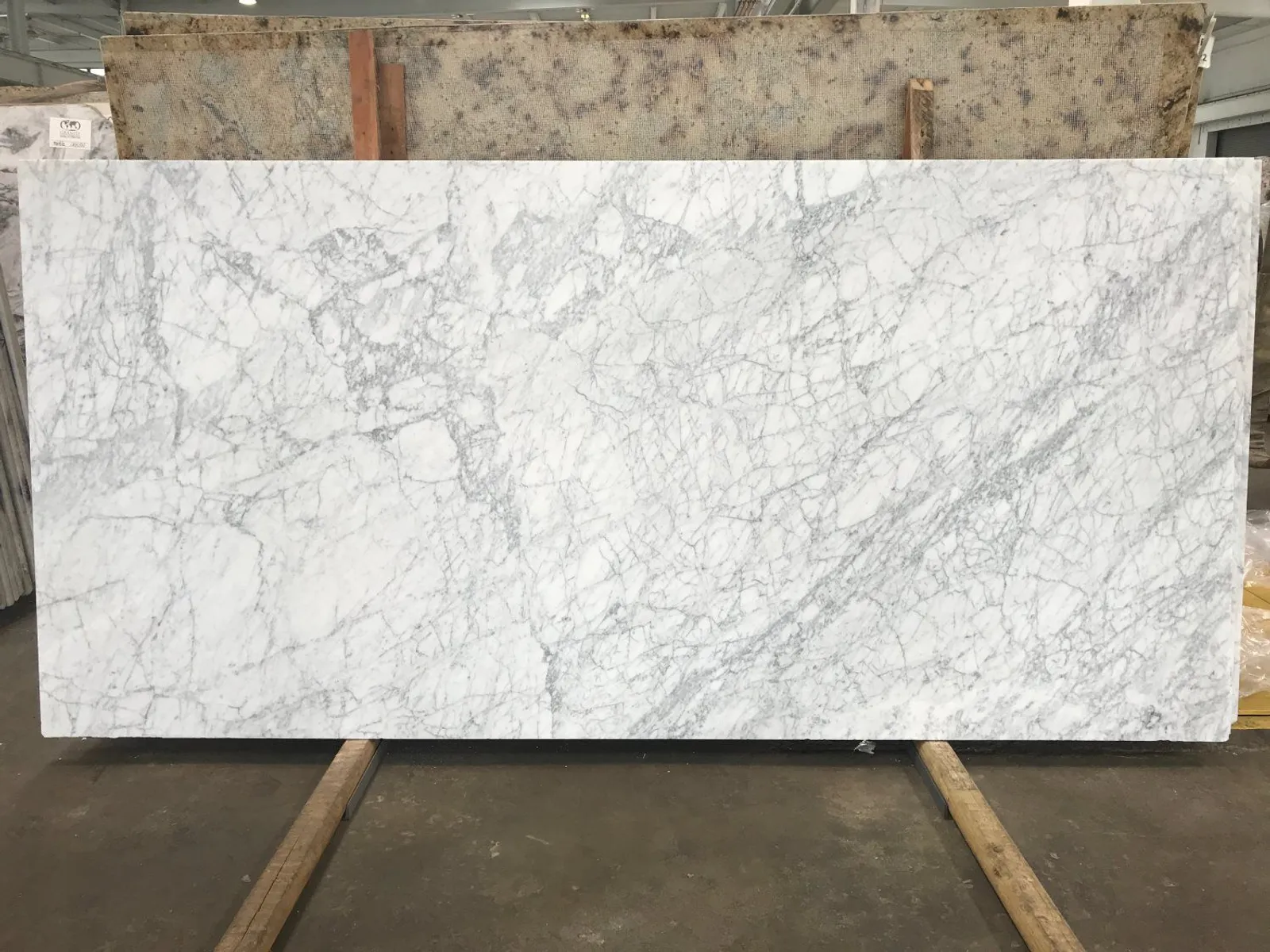
Carrara vs Calacatta: The Short Answer
Carrara and Calacatta are both Italian white marbles, but they look different. Granite Global explains it simply: Carrara is softer and grayer, with fine feathery veins, while Calacatta is whiter and bolder, with thicker, high-contrast veins. Both are marble, so both share the same care needs, including sensitivity to acids like lemon juice and vinegar.
| Point | Carrara | Calacatta |
|---|---|---|
| Background | White to blue-gray | Brighter, cleaner white |
| Veining | Fine, soft, feathery gray veins | Bolder, thicker veins, often gray or gold-toned |
| Overall look | Calm, even, subtle | Dramatic, high contrast |
| Availability | The more common Carrara-area marble | Classed among the more exotic varieties |
| Material | Marble (mostly calcite) | Marble (mostly calcite) |
Granite Global supplies the slabs; your fabricator measures, templates, cuts and installs them, so confirm the exact product name and material before cutting.
Where Carrara and Calacatta Marble Come From
Granite Global points to the quarries for the starting point. Both stones come from the mountains around Carrara, in northern Tuscany, Italy, where the Apuan Alps show evidence of hundreds of quarry sites. Carrara is the broad family of white or blue-gray marble, and Calacatta names a group of rarer, more exotic varieties from the same area.
Marble is a metamorphic rock that forms when limestone is altered by heat and pressure, and it is composed mainly of calcite, according to Geology.com.
Wikipedia's Carrara marble article describes Carrara as a white or blue-gray marble and lists Calacatta Gold, Calacatta Borghini and Calacatta Macchia Vecchia among the more exotic variations quarried in the Carrara area. It also notes that the pure white statuario grade once used for monumental sculpture is now exhausted.
Because both are natural marble, two slabs with the same name can still differ, so always view the lot you will receive.
How to Tell Carrara and Calacatta Apart in Person
Granite Global teaches customers to read three things at the slab: background, vein width and contrast. Stand back first to judge the background, then step close to see the veins. A gray, softly clouded slab with thin veins reads as Carrara; a brighter white slab with wide, dramatic veins reads as Calacatta.
| Check | Points toward Carrara | Points toward Calacatta |
|---|---|---|
| Background from 10 feet | Light gray or blue-gray | Bright, clean white |
| Vein width up close | Thin, feathery lines | Wide, bold bands |
| Contrast | Low; veins blend in | High; veins stand out |
| Pattern spread | Even, all-over texture | Larger open white areas between veins |
| Vein tone | Mostly soft gray | Gray, charcoal or gold-toned |
Bring a cabinet door and floor sample; a gray-leaning Carrara and a bright Calacatta can look very different beside warm or cool finishes.
Calacatta Gold and Other Trade Names on Look-Alikes
Granite Global sees many buyers confused by names. In today's market, Calacatta and Carrara are used as style names on engineered quartz, dolomite and even quartzite that imitate the look. Calacatta Gold, for example, can name a dolomite, and Calacatta Gold Quartz is an engineered surface. Always confirm the material type, not only the name.
| Material type | Examples we carry | What it means for you |
|---|---|---|
| Marble | White Carrara, White Carrara Honed | Natural calcite marble; etches from acids |
| Dolomite | Calacatta Gold, Calacatta Super White, Calacatta Berrini | Natural carbonate stone, somewhat harder than marble; still reacts with acids |
| Quartzite | Calacatta Quartzite | Natural quartz-based stone; confirm it is true quartzite |
| Quartz | Calacatta Gold Quartz, Calacatta Oro Quartz, Carrara Super White Quartz | Engineered surface with a designed pattern |
Geology.com describes dolomite as a rock with a hardness of 3.5 to 4, a little harder than calcite marble at 3, and notes that dolomite produces only a weak reaction to dilute acid where calcite reacts vigorously. When it is changed by heat and pressure, it is called dolomitic marble.
Browse Calacatta Gold and Calacatta Gold Quartz to see how one name covers two very different materials, then call (704) 348-4485 to check availability.
Living With a White Marble Countertop
Granite Global tells customers that Carrara and Calacatta behave the same in a kitchen because both are calcite marble. With a hardness of about 3, marble scratches more easily than quartzite, and it reacts with acids, so lemon juice, vinegar and wine can leave dull etch marks. Many owners accept that patina; others choose a harder look-alike.
Etching
Acids react with calcite and leave dull spots, more visible on polished marble.
Honed finish
A matte surface such as White Carrara Honed makes etch marks less noticeable.
Sealing
Sealer slows stains but does not stop etching, so wipe acids quickly.
If you love the look but not the upkeep, compare marble with a warm white quartzite such as Taj Mahal quartzite, which resists kitchen acids.
Choosing Between Carrara, Calacatta and Look-Alikes
Granite Global suggests choosing by how you cook and the look you want. Pick Carrara for a soft, classic gray-white; pick Calacatta-style stone for bold veins. If acids and scratches worry you, consider dolomite, quartzite or engineered quartz with a Calacatta pattern. Seeing them side by side shows which compromise suits your kitchen.
| If you want | Consider | Keep in mind |
|---|---|---|
| A classic white marble with a soft look | White Carrara or White Carrara Honed | Etches from acids; honed hides marks better |
| Bold Calacatta veins in natural stone | Calacatta-named dolomite | Harder than marble but still reacts to acids |
| A marble look with more resistance to acids | Quartzite with marble-like veining | Confirm it is true quartzite |
| A consistent pattern from slab to slab | Calacatta-pattern engineered quartz | Use trivets for hot pans |
For rarer natural patterns beyond white, our guide to exotic quartzite explains what makes a quartzite stand out.
Common Mistakes With Carrara and Calacatta
Most surprises Granite Global hears about white marble come from names and expectations. Buyers assume every Calacatta is marble, expect polished marble never to etch, or choose from a photo. A short visit with your samples, and a clear question about the material type of each slab, prevents nearly all of these mistakes.
- Assuming a Calacatta name always means Italian marble.
- Expecting sealer to stop etching on marble.
- Choosing polished marble for a busy kitchen without seeing a honed option.
- Judging background color from a phone photo.
- Forgetting to plan bold Calacatta-style veins across seams.
Ask our team to confirm the material type on each label, and write it down for your fabricator.
A Checklist for Comparing White Slabs in Person
Granite Global recommends a focused visit when you compare white marble and its look-alikes. Twenty minutes with the real slabs, under daylight and indoor light, tells you more than hours online. This checklist keeps the comparison fair and gives your fabricator the exact names, finishes and lot numbers they need.
- Shortlist marble, dolomite, quartzite and quartz options online first
- Bring a cabinet door, flooring sample and backsplash tile
- Judge the background from a distance, then the veins up close
- Ask which material type each Calacatta or Carrara name is
- Compare polished and honed White Carrara side by side
- Photograph each slab with its label and lot number
Start with the marble slabs we carry, then visit our Charlotte slab warehouse; walk-ins are welcome and no appointment is needed.
Sources and References
Granite Global based the technical points in this guide on the sources below: what marble is made of and how hard it is, where Carrara and Calacatta marble are quarried, and how dolomite compares with calcite marble in hardness and acid reaction. Open each reference to read the original explanation from the source.
- Wikipedia: Carrara marble (https://en.wikipedia.org/wiki/Carrara_marble), color, quarries and Calacatta varieties
- Geology.com: Marble (https://geology.com/rocks/marble.shtml), composition, hardness and acid reaction
- Geology.com: Dolomite (https://geology.com/rocks/dolomite.shtml), hardness, weak acid reaction and dolomitic marble
Granite Global reviews these references when the guide is updated.
Questions About Carrara vs Calacatta
Which is whiter, Carrara or Calacatta?
Calacatta usually has the brighter, cleaner white background, while Carrara leans white to blue-gray with soft gray veining. Because both are natural marble, individual slabs vary, so Granite Global recommends judging the background from a few feet away in daylight before you look closely at the veins.
Is Calacatta more rare than Carrara?
Calacatta is generally classed among the more exotic varieties quarried in the Carrara area, while Carrara is the broader, more common family of white and blue-gray marble. The Calacatta look is also widely imitated in dolomite, quartzite and engineered quartz.
Is Calacatta Gold a marble?
It depends on the product. Calacatta Gold is a classic Italian marble variety, but the name is also used on other materials. At Granite Global, Calacatta Gold is a dolomite and Calacatta Gold Quartz is an engineered surface. Always ask for the material type, not only the name.
Do Carrara and Calacatta etch?
Yes. Both are marble made mainly of calcite, which reacts with acids such as lemon juice, vinegar and wine and can leave dull etch marks. Sealing slows staining but does not stop etching. A honed finish, like White Carrara Honed, makes those marks less noticeable.
Is dolomite a good alternative to Calacatta marble?
Dolomite can offer a similar white look with bold veins and is a little harder than calcite marble, at 3.5 to 4 on the Mohs scale. It still reacts with acids, only more weakly, so wipe spills quickly. Compare dolomite and marble side by side at Granite Global before deciding.
Can I see White Carrara marble without an appointment?
Yes. Granite Global welcomes walk-ins at 7517 Orr Road in Charlotte, Monday to Friday from 9am to 5pm and Saturday from 9am to 1pm. Call (704) 348-4485 to check availability of White Carrara and the Calacatta-named materials before your visit.
Compare Carrara and Calacatta Looks in Person
See White Carrara marble beside Calacatta-named dolomite, quartzite and quartz in our Charlotte warehouse. Call (704) 348-4485 to check availability before you come.