
Taj Mahal Quartzite: Color, Durability and Care Explained
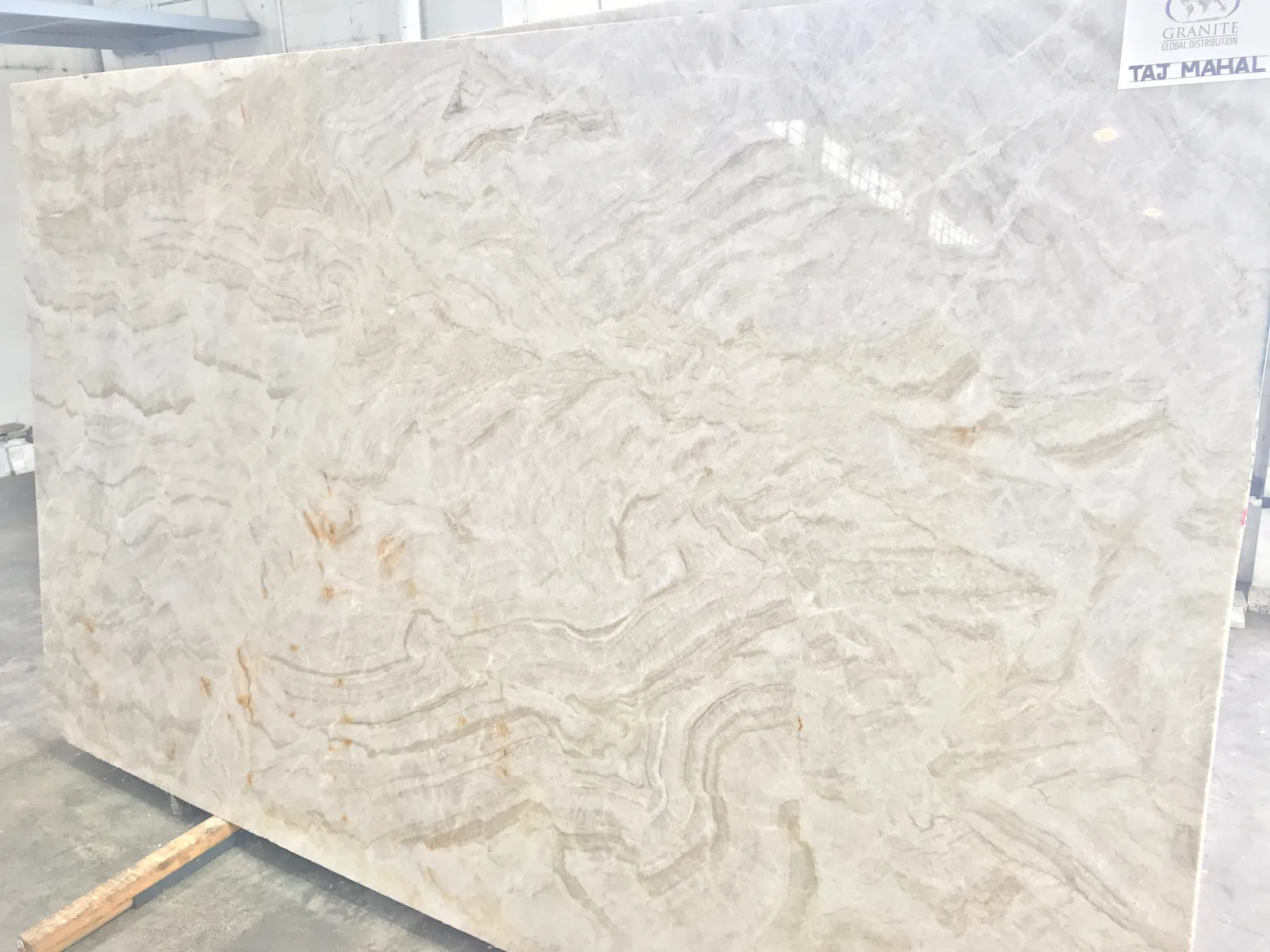
Taj Mahal quartzite is one of the most requested warm white natural stones for kitchens: a soft cream background with gentle beige and gold-toned movement. Granite Global, a family-owned slab distributor in Charlotte, NC, carries Taj Mahal and Taj Mahal Leathered quartzite, plus an engineered Taj Mahal Quartz. This guide explains the color, durability and care, and how to tell the natural stone from the look-alike.
Taj Mahal Quartzite: The Short Answer
Taj Mahal quartzite is a warm white natural stone that gives a soft marble-like look with the hardness of quartzite. Granite Global lists Taj Mahal and Taj Mahal Leathered, alongside an engineered Taj Mahal Quartz. The natural stone offers depth and unique movement; the engineered version offers a more uniform look. Seeing both side by side settles the choice.
| Product | What it is | What to expect |
|---|---|---|
| Taj Mahal | Natural quartzite, polished finish | Warm cream background, soft veining, light sheen and full color depth |
| Taj Mahal Leathered | Natural quartzite, leathered finish | Same stone with a soft texture and low sheen that hides fingerprints |
| Taj Mahal Quartz | Engineered quartz surface | A manufactured pattern inspired by the stone, more uniform from slab to slab |
Granite Global supplies the slabs; your fabricator measures, templates, cuts and installs them, so share the exact product name and lot once you choose.
The Color and Veining of Taj Mahal Quartzite
Granite Global customers usually describe Taj Mahal quartzite as warm white, cream or soft ivory. The veining is gentle rather than dramatic, with beige, taupe and gold-toned movement that can run in long sweeps. Because it is a natural stone, one slab can be lighter or carry more movement than the next, so view the actual lot.
Quartzite is a nonfoliated metamorphic rock composed almost entirely of quartz, formed when quartz-rich sandstone is altered by heat and pressure, according to Geology.com.
| Your room has | How Taj Mahal reads | Tip |
|---|---|---|
| Warm white or cream cabinets | Calm and cohesive | Compare the slab against the cabinet door in daylight |
| Wood or stained cabinets | Warm and soft | Look for slabs with gold-toned veins to echo the wood |
| Bright cool white cabinets | Noticeably warmer | Hold both together; some lots lean more beige than others |
| Dark or navy cabinets | Bright and high contrast | Choose a lighter lot to keep the contrast crisp |
Photos on our site are representative and every slab is unique, so plan to see the slabs you will actually receive before you approve a layout.
How Durable Is Taj Mahal Quartzite?
Granite Global points to quartzite's mineral makeup to explain its durability. Quartzite is made almost entirely of quartz, with a hardness of about 7 on the Mohs scale, so it resists scratches well. True quartzite also does not etch from common kitchen acids like lemon juice or vinegar, a key difference from marble.
The Natural Stone Institute notes that true quartzites do not etch, cannot be scratched easily with a knife blade and will scratch glass. It also notes that porosity varies with how much metamorphism a stone went through, so sealing needs range from not required at all to regular resealing.
Scratches
Quartz-rich stone resists everyday scratches well; still use a cutting board for your knives.
Acids
True quartzite does not etch from lemon or vinegar, so a dull ring is not expected.
Stains
Porosity varies by slab, so test absorption and seal if water darkens the surface.
Taj Mahal sits among many warm and white quartzites; our guide to exotic quartzite explains how rarer patterns and colors compare.
Taj Mahal Quartzite vs Taj Mahal Quartz
Granite Global carries both, and the names confuse many buyers. Taj Mahal is a natural quartzite cut from a quarry block. Taj Mahal Quartz is an engineered surface made from crushed quartz and resin, designed to recall the stone's look. They differ in pattern, heat tolerance and how each slab varies, so compare them carefully.
| Point | Taj Mahal (quartzite) | Taj Mahal Quartz (engineered) |
|---|---|---|
| Origin | Natural metamorphic rock from a quarry | Factory-made from crushed quartz and resin |
| Pattern | Unique in every slab, with real depth | Designed pattern, more consistent between slabs |
| Porosity | Varies by slab; sealing may be needed | Described as non-porous |
| Heat | Natural stone | Less heat resistant than most natural stone; use trivets |
| Choosing | See the actual lot in person | Still compare slabs, but variation is smaller |
According to Wikipedia's engineered stone article, quartz surfaces are about 90 to 93 percent silica by weight in a polyester resin matrix, and they are less heat resistant than most granite, marble and limestone, so manufacturers advise a hot pad or trivet under hot cookware.
Compare the natural and engineered versions side by side; you can browse Taj Mahal Quartz before your visit and call (704) 348-4485 to check availability.
Polished or Leathered Taj Mahal?
Granite Global carries Taj Mahal and Taj Mahal Leathered; ask which finish the current lot has. Polished shows the brightest cream color and the clearest veining. Leathered keeps the same stone but adds a soft texture and lower sheen, which hides fingerprints and water spots. The choice depends on how glossy you want the kitchen to feel.
Taj Mahal
Warm white quartzite with soft movement; ask our team which finish the current lot has.
See Taj Mahal quartziteTaj Mahal Leathered
Soft textured surface with low sheen that hides smudges and everyday crumbs.
See Taj Mahal Leathered
Run your hand across both finishes in person; the texture of a leathered surface is hard to judge from a photo.
Caring for Taj Mahal Quartzite Countertops
Granite Global tells customers that Taj Mahal quartzite is simple to care for. The Natural Stone Institute recommends wiping counters regularly with a gentle cleanser, water and a soft cloth, and watching the sink area for darkening that may mean a sealer is needed. Unlike soapstone, quartzite does not need oiling.
- Ask your fabricator whether your slab should be sealed after installation
- Do a water drop test near the sink every few months
- Clean with water, a gentle cleanser and a soft cloth
- Wipe oil, wine and coffee spills promptly on lighter lots
- Use trivets under hot pans and a cutting board for knives
- Avoid abrasive powders that can dull a polished surface
If you are weighing a darker, softer stone instead, our guide to oiling soapstone countertops explains a very different care routine.
What to Check When You See Taj Mahal Slabs
Granite Global recommends a short, focused visit before you choose Taj Mahal. Look at the full lot, not only the first slab, and bring your cabinet door and floor sample. Check undertone, vein direction and seam placement, and photograph each slab with its label so your fabricator gets the exact information they need.
- Bring a cabinet door, flooring sample and backsplash tile
- View the slabs near daylight and again under indoor light
- Compare polished, leathered and engineered versions side by side
- Check vein direction for islands and seams
- Ask the team to show the slabs behind the first one in the lot
- Photograph each slab with its label and lot number
Shortlist online among our quartzite slabs in Charlotte, then visit our Charlotte slab warehouse; walk-ins are welcome and no appointment is needed.
Common Mistakes With Taj Mahal Quartzite
Most regrets Granite Global hears about Taj Mahal come from rushing the choice. Picking from a phone photo, confusing the quartzite with the engineered quartz, or ignoring how warm a lot reads beside cool cabinets can all lead to surprises. Seeing the real slabs with your samples avoids nearly every one of these problems.
- Ordering Taj Mahal Quartz when you wanted natural quartzite, or the reverse.
- Choosing from a photo instead of the actual slab.
- Pairing a beige-leaning lot with stark cool white cabinets without checking.
- Skipping a water drop test on a lighter, more absorbent slab.
- Forgetting to plan vein flow across seams and the island.
Confirm the full product name, finish and lot number in writing with your fabricator before cutting begins.
Sources and References
Granite Global based the technical points in this guide on the sources below: the definition and hardness of quartzite, how true quartzite resists etching and how its porosity varies, and the composition and heat limits of engineered quartz surfaces. Open each link to read the original explanation from the source.
- Geology.com: Quartzite (https://geology.com/rocks/quartzite.shtml), definition and Mohs hardness
- Natural Stone Institute: Caring for Quartzite Countertops (https://usenaturalstone.org/caring-for-quartzite-countertops/), etching, glass test, sealing and cleaning
- Wikipedia: Engineered stone (https://en.wikipedia.org/wiki/Engineered_stone), composition and heat resistance of quartz surfaces
Granite Global reviews these references when the guide is updated.
Questions About Taj Mahal Quartzite
Is Taj Mahal a quartzite or a quartz?
Taj Mahal is a natural quartzite, a metamorphic rock made almost entirely of quartz. Taj Mahal Quartz is a separate engineered product made from crushed quartz and resin that imitates the look. Granite Global carries both, so always confirm the full product name with your fabricator before cutting.
Does Taj Mahal quartzite etch?
True quartzite does not etch from common kitchen acids such as lemon juice or vinegar, according to the Natural Stone Institute. That is one of the main reasons people choose it over marble for a warm white kitchen. Wipe spills anyway, because porosity varies and some slabs can absorb liquids.
Does Taj Mahal quartzite need to be sealed?
It depends on the slab. The Natural Stone Institute notes that sealing needs range from not required at all to regular resealing, depending on density and porosity. A water drop test tells you: if the surface darkens within a few minutes, ask your fabricator about a penetrating sealer.
Is Taj Mahal quartzite white or beige?
It sits between the two. Most slabs have a warm cream or off-white background with beige, taupe and gold-toned veins. Some lots lean lighter and some warmer, which is why Granite Global recommends comparing the actual slabs against your cabinet door in daylight.
What is the difference between Taj Mahal and Taj Mahal Leathered?
They are the same natural quartzite with different finishes. Taj Mahal is reflective and shows the brightest color and clearest veining. Taj Mahal Leathered has a soft texture and lower sheen that hides fingerprints and water spots. Granite Global carries both, so you can feel them side by side.
Can I see Taj Mahal slabs without an appointment?
Yes. Granite Global welcomes walk-ins at 7517 Orr Road in Charlotte, Monday to Friday from 9am to 5pm and Saturday from 9am to 1pm. Call (704) 348-4485 to check availability of Taj Mahal before you come, since slabs move as they sell.
Compare Taj Mahal Slabs in Person
See Taj Mahal, Taj Mahal Leathered and Taj Mahal Quartz side by side in our Charlotte warehouse, with your cabinet door in hand. Call (704) 348-4485 to check availability.