
Dolomite Kitchen Countertops: Is Dolomite a Good Choice?
Dolomite kitchen countertops give you the white-and-gray look of marble with a little more resistance to acids, but they are not as tough as true quartzite. Granite Global, a family-owned slab distributor in Charlotte, NC, carries several dolomites. This guide explains how dolomite handles etching, scratching and stains in a real kitchen, which finish to choose and who it fits.
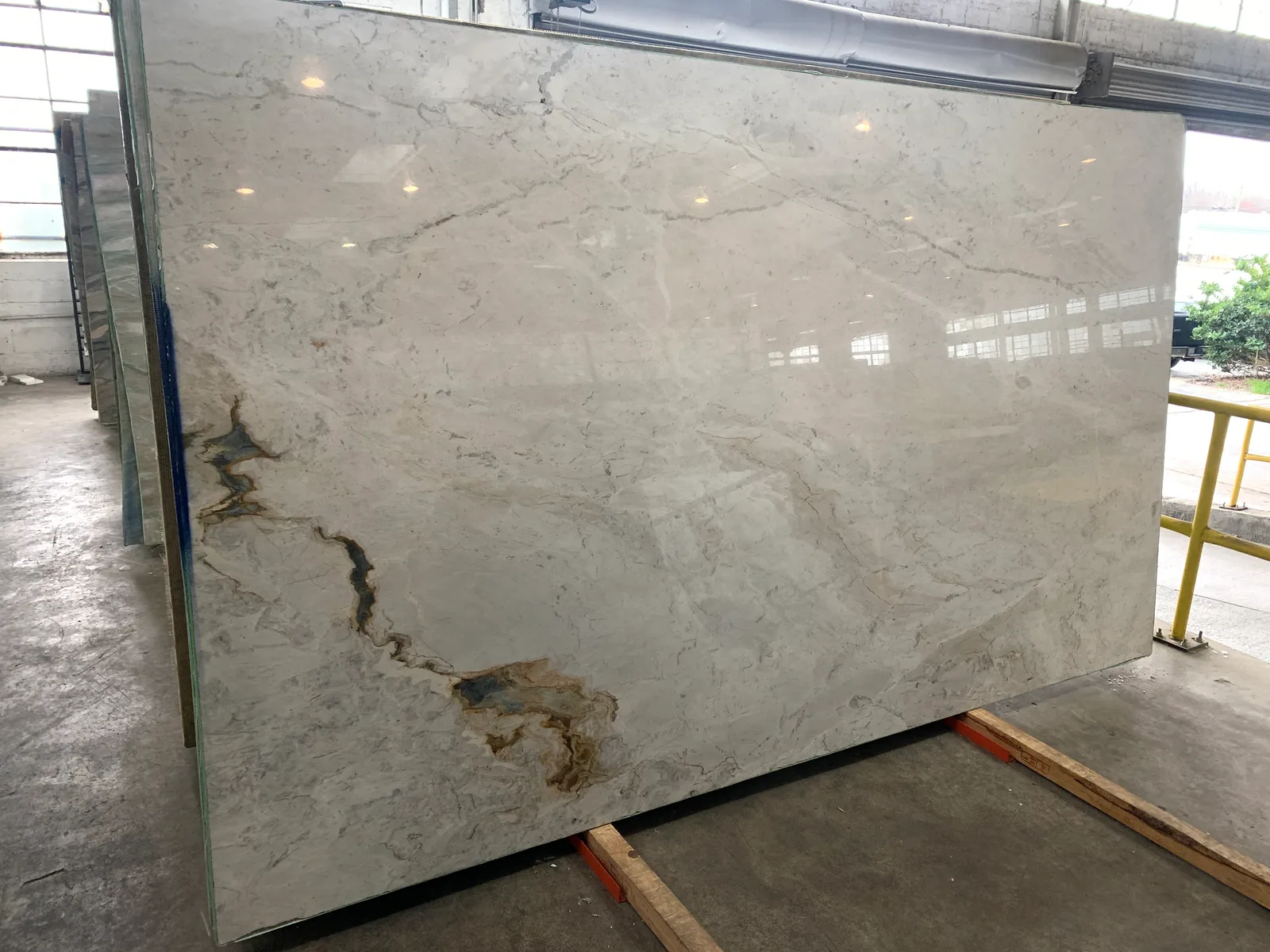
Dolomite Kitchen Countertops: The Short Answer
Dolomite can be a good kitchen countertop if you want a marble look and accept some patina. Granite Global explains it this way: dolomite etches more slowly than marble, scratches more easily than quartzite and is less likely to stain once sealed. It suits careful cooks and honed or leathered finishes better than busy kitchens that want zero upkeep.
| What matters | Marble | Dolomite | True quartzite |
|---|---|---|---|
| Main mineral | Calcite | Dolomite | Quartz |
| Reaction to lemon or vinegar | Etches quickly | Etches more slowly, but can etch | Generally resists etching |
| Scratch resistance | Low | Low to moderate (3.5 to 4 Mohs) | High (about 7 Mohs) |
| Sealing | Recommended | Recommended | Recommended for most |
| Good fit | Baths, fireplaces, low-use areas | Careful kitchens, islands, baths | Busy kitchens |
Granite Global supplies the slabs; your fabricator measures, templates, cuts and installs them, so ask them about sealing and edge profiles before you commit.
What Dolomite Stone Is and Why It Behaves Differently
Granite Global describes dolomite as a close cousin of marble. Both are carbonate stones, but dolomite is built from the mineral dolomite, a calcium magnesium carbonate, instead of calcite. That magnesium makes it react with acid more slowly and gives it slightly more hardness, which is why many kitchens choose it over marble.
Dolomite is a carbonate rock composed primarily of the mineral dolomite, CaMg(CO3)2. The stone trade often calls it dolomite or dolomitic marble.
According to Geology.com's guide to the mineral dolomite, dolomite has a Mohs hardness of 3.5 to 4 and fizzes only weakly in cold hydrochloric acid, while calcite reacts strongly. In a kitchen, that chemistry means a splash of lemon juice wiped up quickly is less likely to leave a dull mark on dolomite than on marble, though a long contact can still etch it.
If you are still deciding between the two carbonate stones, our marble vs dolomite guide compares their looks and origins side by side.
Etching, Scratching and Stains on Dolomite in Daily Use
Granite Global is direct about the three risks. Etching is a chemical dulling from acids, scratching is physical wear from grit and blades, and staining is liquid soaking in. Dolomite handles acids better than marble, scratches more easily than quartzite and resists stains well once sealed. Knowing which risk is which prevents most surprises.
| Risk | Common causes | How to prevent it |
|---|---|---|
| Etching | Lemon, lime, vinegar, wine, tomato sauce, acidic cleaners | Wipe acids quickly, use trays under bottles, choose a honed or leathered finish |
| Scratching | Knives, sand and grit, ceramic pots dragged across the top | Cutting boards, wipe crumbs and grit, lift cookware instead of sliding it |
| Staining | Cooking oil, coffee, wine on an unsealed surface | Seal after installation and reseal when water stops beading |
A sealer only solves one of these. The stone care FAQ from Laticrete's STONETECH line states that penetrating sealers protect against water and oil borne staining but cannot protect against etching, and that etch marks are properly repaired only by mechanically refinishing the area.
Treat etching as a patina that develops over time; if you want a surface that stays uniform with no care, dolomite is probably not your stone.
Choosing a Finish for a Dolomite Kitchen
The finish changes how visible etching and scratches are. Granite Global often shows customers that a polished dolomite looks brightest but makes dull etch marks stand out, while honed and leathered dolomite already have a soft surface that hides them. Several dolomites we carry come in honed or leathered versions, so compare finishes in person.
Polished
Brightest white and deepest veining, but etch marks show as dull spots against the shine.
Honed
Soft matte surface that blends light etching; wipe oil promptly and keep it sealed.
Leathered
Gentle texture that hides fingerprints, etching and fine scratches in daily use.
Ask our team which finishes each dolomite comes in, and look at the honed or leathered versions under the light of your own kitchen before deciding.
Dolomites Granite Global Carries for Kitchens
Granite Global carries a range of white and veined dolomites, several in more than one finish. The three below are frequent kitchen choices. Open each page for a representative photo, then call (704) 348-4485 to check availability, because slabs sell and new lots arrive, and every slab differs from its photo.
Super White
A white to soft gray dolomite with gentle gray movement, also offered honed and leathered.
See Super White dolomiteStatuary Classic
A bright white dolomite with defined gray veining for a classic marble look.
See Statuary Classic dolomiteCalacatta Gold
A white dolomite with warmer gray and gold veins that suits warm cabinets.
See Calacatta Gold dolomite
Other options include Hyper White and its honed version, Super White Leathered and Statuary Classic Leathered. Stone names are not standardized, so the same material can carry a different name elsewhere.
Browse all our dolomite slabs in Charlotte to build a shortlist, and if you love the Calacatta look, our Carrara vs Calacatta guide explains the two veining styles.
Who Dolomite Fits and Who Should Look Elsewhere
Granite Global recommends dolomite for clients who love a marble look, cook with some care and accept a little patina. Clients who want a white stone they never think about usually do better with true quartzite or quartz. Matching the stone to how you live matters more than matching it to a photo.
| Your kitchen | Dolomite fit | Consider instead |
|---|---|---|
| Light cooking, quick cleanup | Good fit | Polished or honed dolomite |
| Heavy daily cooking with citrus and sauces | Possible with a honed or leathered finish | True quartzite |
| Kids, grit and sliding pots | Expect visible wear over time | Quartzite or granite |
| Island or perimeter with a marble look | Good fit | Dolomite with a cutting board habit |
| Wants zero maintenance | Poor fit | Quartz |
For comparison, Geology.com notes that quartzite has a hardness of about seven on the Mohs scale and stands up better to abrasion on countertops. That is the trade-off: more hardness in exchange for a different look and, often, a different budget.
If you want the most durable white natural stone, read our guide to Taj Mahal quartzite before you choose.
What to Check on Dolomite Slabs at the Warehouse
Granite Global suggests a short routine when you see dolomite slabs in person. Look at the veining across the whole lot, compare finishes, test a sample for absorption and acid reaction, and photograph each slab label. Twenty minutes with the real slabs gives your fabricator exact names and lots, and avoids surprises at installation.
- Bring a cabinet door, flooring sample and backsplash tile
- View each slab near daylight and under indoor light
- Compare polished, honed and leathered versions if available
- Ask for a sample and test lemon juice on it at home for a few minutes
- Do a water drop test to see how quickly the stone darkens
- Check that the slabs in one lot share similar color and veining
- Photograph each slab with its label and lot number
When you are ready, visit our Charlotte slab warehouse at 7517 Orr Road; walk-ins are welcome Monday to Friday 9am to 5pm and Saturday 9am to 1pm.
Sources and References
Granite Global based the technical points in this guide on the sources below. They cover the hardness and acid reaction of dolomite, the hardness of quartzite and what penetrating sealers can and cannot do. Each link opens the original page, so you can read the details and check the facts for yourself.
- Geology.com: Dolomite mineral (https://geology.com/minerals/dolomite.shtml): Mohs hardness of 3.5 to 4 and weak reaction with cold hydrochloric acid compared with calcite.
- Geology.com: Quartzite (https://geology.com/rocks/quartzite.shtml): hardness of about seven on the Mohs scale and abrasion resistance on countertops.
- Laticrete STONETECH FAQ (https://ma.laticrete.com/our-products/tile-stone-and-surface-care/resources/faqs): penetrating sealers protect against staining, not etching.
Stone varies from quarry to quarry and slab to slab, so always test a sample of the exact material you plan to install.
Questions About Dolomite Kitchen Countertops
Does dolomite etch like marble?
Dolomite can etch, but more slowly than marble. The mineral dolomite reacts only weakly with cold dilute acid, while the calcite in marble reacts strongly. A splash of lemon juice wiped up quickly usually leaves no mark, but acids left sitting can dull the surface, especially on a polished finish. Granite Global suggests testing a sample with lemon juice before you decide.
Will sealing stop dolomite from etching?
No. A penetrating sealer helps keep oil, wine and coffee from soaking in and staining, but it cannot stop the chemical reaction that causes etching. Sealing is still worth doing on dolomite kitchen countertops for stain protection. Prevent etching by wiping acids quickly and choosing a honed or leathered finish if you cook with citrus and vinegar often.
Can dolomite scratch?
Yes. Dolomite sits at about 3.5 to 4 on the Mohs scale, far softer than true quartzite at about 7. Knives, sand and sliding ceramic pots can leave marks over time. Use cutting boards, wipe away grit and lift cookware instead of dragging it. Honed and leathered finishes make fine scratches much less visible.
Is dolomite a good choice for a kitchen island?
Often, yes. An island is a showpiece where a veined white stone shows off its movement, and many islands see more serving and gathering than heavy prep. Keep a cutting board for chopping and wipe spills quickly. If the island is your main prep zone with lots of citrus, consider a honed or leathered dolomite or a true quartzite.
Is Super White quartzite or dolomite?
Granite Global lists Super White as a dolomite. Some suppliers have marketed it as quartzite, which leads to surprises when it etches. The quickest check is a scratch and acid test on a sample: true quartzite resists both, dolomite does not. Ask your supplier for the classification and test a sample of the exact lot you will install.
Which dolomites does Granite Global carry?
Granite Global carries dolomites including Super White, Statuary Classic, Calacatta Gold, Hyper White and Calacatta Super White, several of them in honed or leathered versions. Inventory changes as slabs sell and new lots arrive, so call (704) 348-4485 to check availability before you visit our Charlotte warehouse.
See Dolomite Slabs in Person
Shortlist dolomites online, then bring your cabinet door to our Charlotte warehouse and compare polished, honed and leathered slabs side by side, no appointment needed.