
Marble Countertop Etching: Prevent It and Fix It
Marble countertop etching is the dull, lighter mark that appears when lemon juice, wine, tomato sauce or vinegar touches the stone. Granite Global stocks marble slabs in Charlotte and talks about etching with every customer who loves marble, because knowing why it happens, how to prevent most of it and how dull spots are repaired helps you choose marble with clear eyes.
- Etching explained simply
- Prevention and repair
- Walk-ins welcome
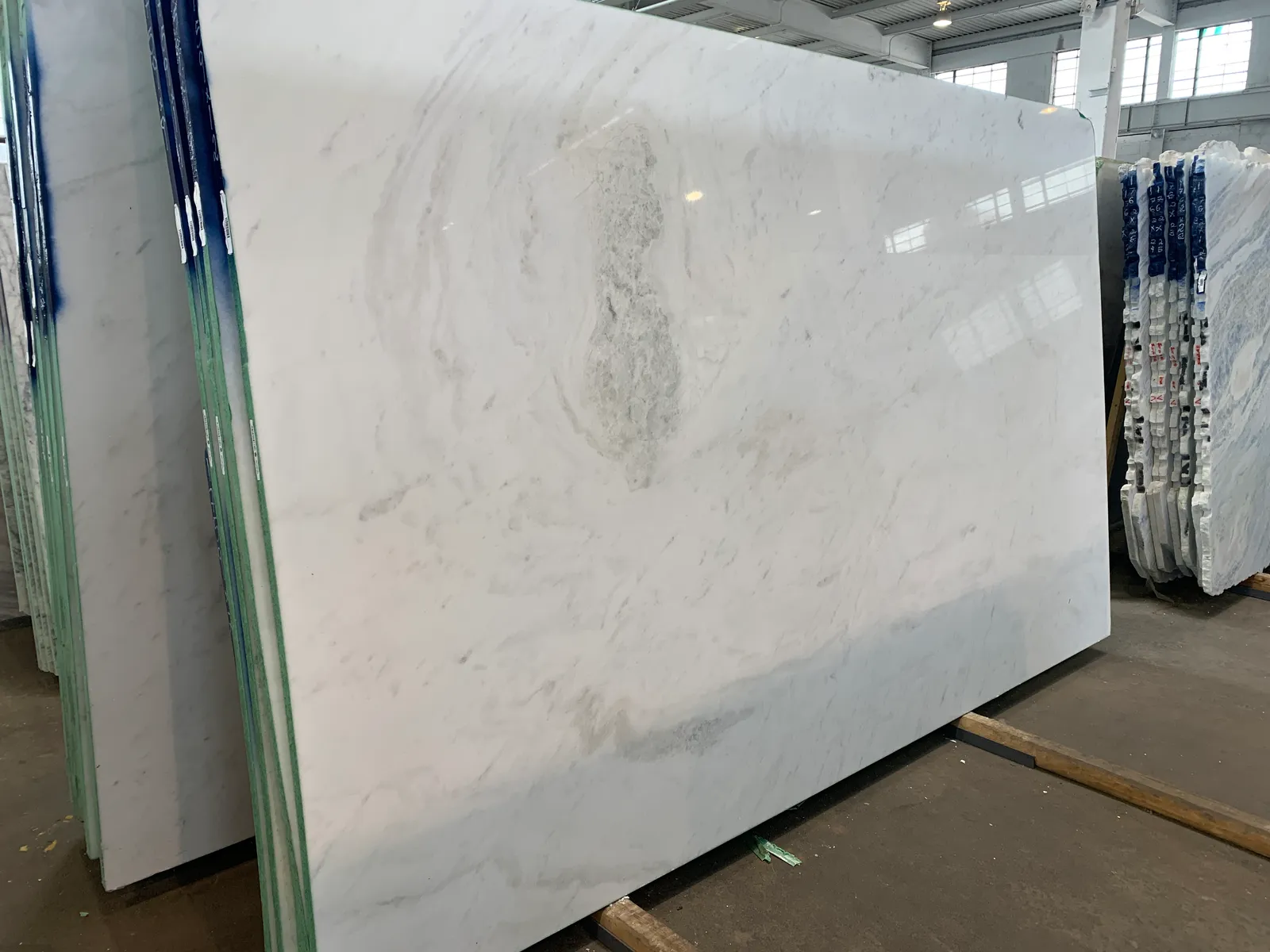
What Marble Etching Is and Why It Happens
Granite Global explains etching in one sentence: marble is made mostly of calcite, a form of calcium carbonate, and acids dissolve a thin layer of it on contact. The result is a dull, lighter spot where the polish used to be. It happens within seconds to minutes, which is why even a quick lemon drip can leave a mark.
Etching is surface damage on calcite-based stone such as marble, limestone and many dolomites, caused by acids that react with the stone and remove its polish, leaving a dull mark that may feel slightly rough.
| Source | Etching risk | Where it usually happens |
|---|---|---|
| Lemon, lime and citrus juice | High | Prep areas and bar tops |
| Vinegar and vinaigrettes | High | Near the cooktop and salad prep |
| Wine, soda and fruit juice | Moderate to high | Islands and serving areas |
| Tomato sauce | Moderate | Around the cooktop |
| Acidic or all-purpose cleaners | High | Anywhere they are sprayed |
| Some cosmetics and toothpaste | Moderate | Bathroom vanities |
Dolomite is also a carbonate stone and can etch, though often more slowly than marble; our care guides treat both with the same caution.
Etching vs Staining: How to Tell the Difference
Granite Global helps customers tell them apart with a simple rule: an etch is lighter and duller than the stone around it, while a stain is darker or colored. An etch is a change in the surface, so you can often feel or see it when light hits at an angle. A stain is something that soaked into the stone.
| Sign | Etch | Stain |
|---|---|---|
| Color | Lighter, whitish or cloudy | Darker or tinted |
| Surface | Dull, may feel slightly rough | Usually unchanged texture |
| Cause | Acid reacting with calcite | Liquid soaking into the pores |
| Does sealer help? | No | Yes, it slows absorption |
| Typical fix | Polishing or honing | Poultice that draws it out |
If the mark is darker, follow our guide to remove stains from natural stone countertops instead of polishing.
How to Prevent Marble Countertop Etching
Granite Global tells marble owners that prevention is mostly about habits, since sealer does not stop etching. Keep acidic foods and drinks on boards, trays and coasters, wipe acidic spills right away, clean only with pH-neutral stone cleaners and consider a honed finish, which hides light etches far better than a high polish.
- Cut lemons and tomatoes on a cutting board, never on the stone
- Use coasters under wine, juice and soda glasses
- Keep oils, vinegars and citrus on a tray near the cooktop
- Wipe acidic spills immediately with water, then dry
- Clean only with pH-neutral cleaners labeled safe for marble
- Keep bathroom products on a tray on marble vanities
Sealing still matters for marble because it slows stains; our guide on how to seal granite countertops and how often explains the water test and the steps.
Polished vs Honed Marble: Which Hides Etching Better?
Granite Global often recommends a honed finish to people who love marble but cook every day. An etch removes shine, so on polished marble it shows as a dull patch against the gloss, while on honed marble the surface is already matte and most light etches blend in. Leathered marble also hides etching well thanks to its texture.
Polished marble
Deepest color and shine, but light etches show clearly against the gloss.
Honed marble
Matte surface where most light etches blend in, though stains can show more.
Leathered marble
Soft texture that hides etches and fingerprints, with a more rustic feel.
The finish also changes how marble looks in a room, so compare marble slabs to see in person in both polished and honed versions before you decide.
How to Fix Etching on Marble Countertops
Granite Global explains that the right repair depends on how deep the etch is. Light etches on polished marble can often be improved at home with a marble polishing compound used exactly as the label says. Deeper or wide etches need honing and repolishing by a stone restoration professional, who can blend the repair into the surrounding stone.
Confirm it is an etch
Look at the mark at an angle; a dull, lighter spot is an etch, not a stain.
Clean and dry the area
Wash with a pH-neutral cleaner and let the stone dry completely.
Test the polishing compound
Try a marble polishing compound on a small area, following the label.
Buff gently
Work the compound with a soft cloth or pad and check the shine as you go.
Stop if it does not improve
Deep or rough etches need professional honing, not more pressure.
Reseal if needed
Do a water test after any repair and reseal the area if it absorbs.
On honed marble, light etches are usually left alone or blended by a professional, since home polishing compounds can create a shiny spot on a matte surface.
Is Marble Right for Your Kitchen or Bath?
Granite Global believes marble is a wonderful choice when you know what to expect. People who enjoy the soft patina that develops over years are usually happy with marble kitchens, while people who want a surface that looks new forever often prefer quartzite or granite. Bathrooms are an easier place to enjoy marble, with less acid exposure.
| You value | Marble fits if | Consider instead |
|---|---|---|
| Classic look and patina | You accept etching as part of its character | Marble, often honed |
| Low-maintenance kitchen | You rarely cook with acids on the counter | True quartzite or granite |
| Bathroom elegance | You keep products on a tray | Marble works well on vanities |
| Consistent look for years | You plan regular professional care | Quartzite or quartz |
If you want the marble look with less etching, read how to clean quartzite countertops without damage, and see why many homeowners choose marble on a bathroom vanity.
Common Marble Etching Mistakes
Granite Global sees the same mistakes turn small etches into bigger repairs: scrubbing an etch as if it were a stain, using vinegar or all-purpose sprays to clean, assuming sealer stops etching and trying aggressive home sanding. A gentle, informed approach keeps marble beautiful and keeps repair costs down when an etch does happen.
- Believing a sealed marble countertop cannot etch
- Cleaning with vinegar, citrus or general bathroom sprays
- Scrubbing an etch with abrasives, which widens the dull area
- Using a polishing compound on honed marble and creating a shiny patch
- Sanding the stone at home instead of calling a professional
- Leaving wine glasses and citrus directly on the stone at parties
When you are ready to choose, visit our Charlotte slab yard to compare polished and honed marble slabs side by side in good light.
Questions About Marble Etching
Does sealing prevent marble etching?
No. Sealer slows down how fast liquids soak into marble, which helps against stains, but acids react with the calcite on the surface whether the stone is sealed or not. Granite Global recommends sealing marble for stain protection and relying on coasters, trays and quick wiping to prevent etching.
Can etching on marble be removed?
Usually, yes. Light etches on polished marble often improve with a marble polishing compound, and deeper etches can be honed and repolished by a stone restoration professional. Granite Global suggests trying the gentlest method first and calling a professional before using anything abrasive on the countertop.
Does honed marble etch?
Honed marble etches just like polished marble, because the chemistry is the same. The difference is visibility: on a matte surface most light etches blend in, while on a polished surface they show as dull patches. Granite Global often suggests honed marble for busy kitchens for that reason.
Does dolomite etch like marble?
Dolomite is also a carbonate stone, so strong acids can etch it, although it often reacts more slowly than calcite marble. Care is similar: pH-neutral cleaners, quick wiping and coasters. Granite Global recommends treating dolomite countertops with the same caution as marble and testing a sample slab piece if you are unsure.
What cleaner is safe for marble countertops?
Use warm water with a pH-neutral cleaner labeled safe for marble or natural stone, applied with a soft cloth and followed by drying. Avoid vinegar, lemon, bleach, ammonia and most all-purpose sprays. Granite Global reminds customers that many common kitchen cleaners are acidic enough to etch marble with regular use.
Is marble a bad choice for a kitchen?
Not at all, as long as you expect some etching over time. Many people love the soft, lived-in patina marble develops, especially on a honed finish. If you want a surface that stays uniform with little care, quartzite or granite may suit you better. Granite Global can show you all of them side by side.
See Marble Slabs and Finishes in Person
Browse marble in stock online, then walk into our Charlotte warehouse to compare polished and honed slabs before you choose, no appointment needed.